Why Seoul, Why Now
Sensfix has opened its Asia-Pacific headquarters in Seoul, South Korea, a strategic expansion that adds a fourth global office to the company's existing presence in San Francisco, St. Petersburg (Florida), and Lodz (Poland). The decision to anchor APAC operations in Seoul reflects a deliberate assessment of where industrial AI demand is growing fastest, where the manufacturing ecosystem is most advanced, and where the infrastructure exists to support rapid deployment at scale.
South Korea is not an obvious choice for companies that think of APAC expansion as synonymous with China or India. But for a company building multimodal AI for industrial operations, Korea presents a combination of factors that no other market in the region can match.
South Korea's Manufacturing Advantage
South Korea is the fifth-largest manufacturing economy in the world by output, with particular depth in semiconductors, automotive, shipbuilding, electronics, petrochemicals, and steel. These are not low-complexity assembly operations. Korean manufacturing is characterized by high automation rates, sophisticated quality control requirements, and a workforce that is deeply familiar with technology-driven process improvement.
The country's major industrial conglomerates (Samsung, Hyundai, SK, LG, POSCO) operate some of the most advanced production facilities on the planet. Their supply chains extend across thousands of tier-one and tier-two suppliers, each of which faces similar pressures around quality, efficiency, and predictive maintenance. The total addressable market for industrial AI within Korea's manufacturing ecosystem alone is substantial, and it is growing as companies pursue their own digital transformation initiatives.
Key characteristics that make Korea attractive for industrial AI deployment:
- High automation density: South Korea has the highest robot density in the world, with over 1,000 industrial robots per 10,000 manufacturing employees, which means factories are already instrumented with cameras, sensors, and digital infrastructure that AI can leverage
- 5G leadership: Korea was the first country to launch commercial 5G networks and continues to lead in 5G penetration, providing the low-latency, high-bandwidth connectivity that edge AI applications require
- Digital infrastructure: World-class broadband penetration, advanced data center infrastructure, and a government actively investing in AI and smart manufacturing through initiatives like the Digital New Deal
- Quality culture: Korean manufacturers have long been leaders in Six Sigma, lean production, and total quality management, creating an organizational culture that values the kind of continuous monitoring and defect detection that AI enables
- Skilled workforce: A deep pool of engineering talent with expertise in automation, robotics, and software development, including graduates from world-class research universities like KAIST, SNU, and POSTECH
The Seoul Team
The Seoul office is not a satellite sales presence. It is a full operational hub with capabilities spanning business development, technical deployment, customer success, and localization engineering. The team brings deep expertise in Korean industrial operations, with backgrounds in manufacturing technology, enterprise software, and industrial automation, the domain knowledge necessary to translate Sensfix's platform capabilities into solutions that fit the specific requirements and workflows of Korean industrial customers.
Building a local team with local expertise is not optional in the Korean market. Enterprise procurement processes, technical integration requirements, regulatory compliance, and business relationship norms all demand a presence that understands the market from the inside. The Seoul team is structured to provide the same depth of engagement that Sensfix delivers in its US and European markets.
Multilingual OCR and Localization
One of the technical capabilities that makes the APAC expansion particularly timely is Sensfix's multilingual OCR processing through ServiceOCRPro. Industrial documentation in Korean facilities includes a mix of Korean (Hangul), English, and occasionally Japanese or Chinese text on equipment labels, safety signage, maintenance manuals, compliance documents, and operational displays.
ServiceOCRPro's ability to handle multilingual content in a single scan is a meaningful differentiator in a market where many Western AI tools struggle with non-Latin scripts. The system processes Korean text alongside English technical terminology, reads mixed-language equipment labels, and extracts data from forms that combine Hangul descriptions with numeric readouts in standard notation. This is not a peripheral feature; it is a core requirement for any AI platform operating in Korean industrial environments.
Beyond OCR, the entire Sensfix platform supports Korean-language interfaces, reporting, and workflow content. The localization extends to the digital maintenance workflows in TaskflowDigitizerAI, the inspection forms in FormifyPro, and the issue classification models in ReportAI. Korean technicians interact with the system in their native language, which is essential for adoption and accuracy in production environments where miscommunication has safety implications.
Initial Deployments with Korean Manufacturers
The Seoul office opens with initial deployment engagements already underway with Korean industrial manufacturers. While specific customer details are confidential at this stage, the initial use cases reflect the breadth of the SAAI Suite's capabilities:
Visual Quality Inspection
Leveraging existing camera infrastructure to detect surface defects, dimensional anomalies, and assembly errors on production lines.
Equipment Health Monitoring
Computer vision and audio AI tracking the condition of critical manufacturing equipment and predicting maintenance needs.
Digital Maintenance Workflows
Replacing paper-based inspection checklists with guided, evidence-capturing digital procedures.
Automated Meter & Gauge Reading
ServiceOCRPro digitizing analog instrument readings across factory floors.
These initial engagements serve a dual purpose: they deliver immediate operational value to the customers involved, and they generate the domain-specific training data and deployment experience that will accelerate subsequent deployments across the Korean manufacturing ecosystem.
A Four-Office Global Footprint
The Seoul opening brings Sensfix's global presence to four offices across three continents:
- San Francisco, USA: Corporate headquarters, business development, and strategic partnerships
- St. Petersburg, Florida, USA: North American operations, customer success, and deployment engineering
- Lodz, Poland: European headquarters, core R&D, AI model development, and EU customer operations
- Seoul, South Korea: APAC headquarters, regional business development, deployment, and localization
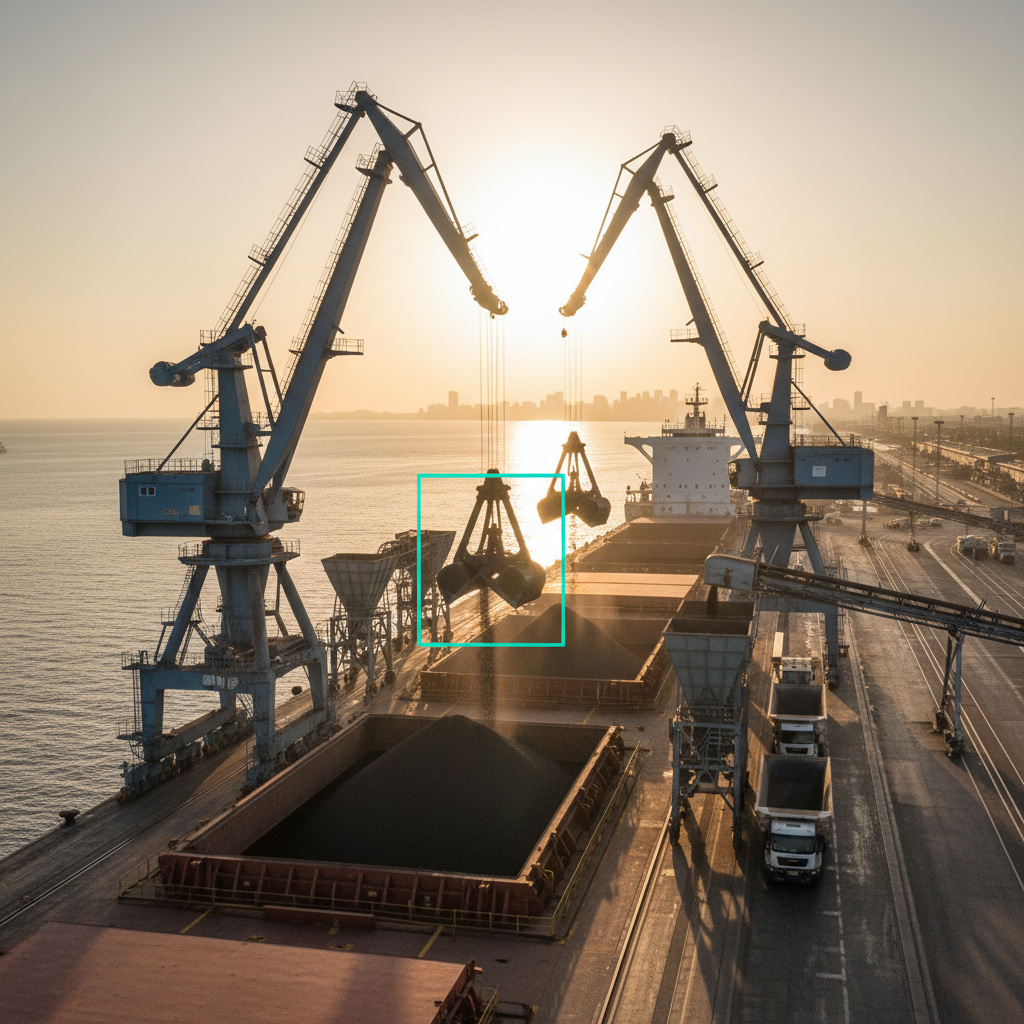
This distributed structure is not incidental. Industrial AI deployments require proximity to customers: for technical integration, for on-site validation, and for the kind of ongoing collaboration that remote-only relationships cannot sustain. A port operator in Busan, a semiconductor manufacturer in Gyeonggi-do, or a shipbuilder in Geoje needs a partner that can be on-site when deployment complexities arise. The Seoul office provides that presence for the entire APAC region.
Industrial AI is not a product you ship and forget. It is a capability you deploy, integrate, and continuously improve in collaboration with operations teams on the ground. That requires being where our customers are, and increasingly, our customers are in Asia-Pacific.
The Growing Demand for Industrial AI in APAC
The APAC industrial AI market is projected to grow at a compound annual rate exceeding 25 percent through the end of the decade, driven by manufacturing modernization, labor cost pressures, quality requirements from global supply chain partners, and government incentive programs across Korea, Japan, Singapore, and Australia. The region represents the largest manufacturing base in the world, and the gap between current automation levels and AI-augmented operations represents an enormous opportunity.
Korea, as the most technologically advanced manufacturing economy in the region, is the natural beachhead. But the Seoul office is positioned to serve the broader APAC market as well, engaging with manufacturers, port operators, utilities, and infrastructure companies across the region who are actively seeking production-grade AI solutions that go beyond pilot-stage experiments.
For Sensfix, the Seoul office is not just a geographic expansion. It is a statement about where the company sees the future of industrial AI, and a commitment to being present in the markets where that future is being built.
Ready to See These Results?
Book a personalized demo and see how the SAAI Suite delivers measurable outcomes for your operations.