Digital Transformation in Manufacturing: 2024 Outlook
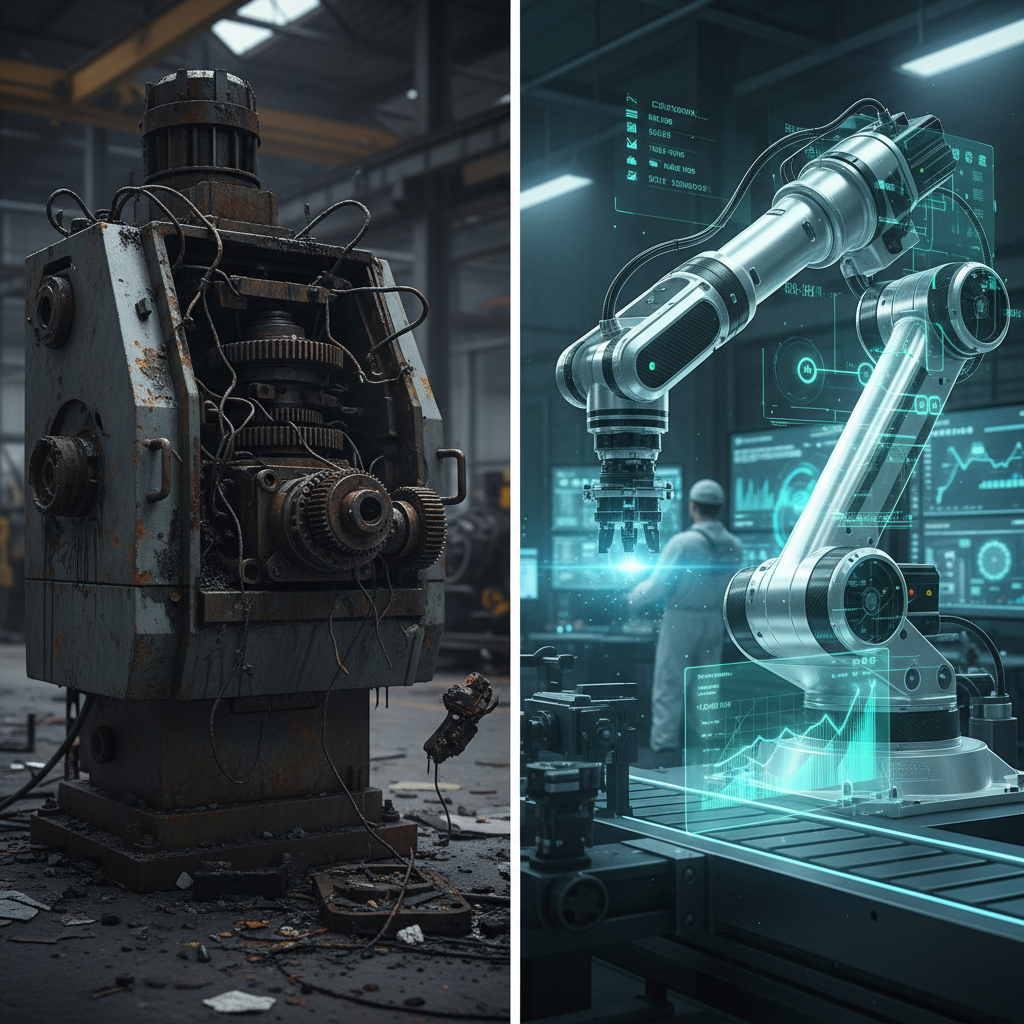
The manufacturing sector is in the midst of a fundamental technology transition. After years of incremental digitization, ERP implementations, MES deployments, basic IoT pilots, the industry is entering a phase where artificial intelligence, edge computing, and 5G connectivity are converging to create genuinely intelligent factory operations. The manufacturing digital transformation of 2024 and beyond is not about installing more sensors or buying more software. It is about creating factory environments where data flows seamlessly from machine to model to action, with minimal human intervention in routine decisions.
Edge AI: Intelligence at the Machine Level
The most significant architectural shift in manufacturing technology is the movement of AI inference from cloud data centers to edge devices located directly on the factory floor. Edge AI means that computer vision models, anomaly detection algorithms, and predictive maintenance models run on hardware installed next to the machines they monitor, processing data locally in milliseconds rather than sending it to a remote cloud and waiting for a response.
This matters for manufacturing because many critical applications require real-time response. A quality defect detected on a production line needs to trigger a reject mechanism within milliseconds, not seconds. A safety violation detected near a press brake needs an immediate stop signal, not a cloud round-trip. Edge AI delivers the latency performance that these applications demand while also reducing bandwidth requirements and maintaining operation during network interruptions.
The hardware enabling this shift has matured rapidly. NVIDIA Jetson modules, Intel Movidius processors, and custom ASIC solutions now deliver inference performance at the edge that would have required a data center GPU just a few years ago, at a fraction of the power consumption and cost.
5G-Connected Factories: Beyond the Hype
5G in manufacturing is moving past pilot programs into production deployments. The Ericsson 5G Accelerator program, which selected Sensfix for its 5G Smart Factory initiative in Poland, demonstrates the practical applications of 5G connectivity in industrial environments.
The value of 5G for manufacturing is not just speed. It is the combination of three capabilities:
- Ultra-reliable low-latency communication (URLLC): Enables real-time machine control and safety-critical applications that Wi-Fi cannot reliably support in RF-noisy factory environments.
- Massive machine-type communication (mMTC): Supports the dense sensor deployments required for comprehensive factory monitoring, thousands of sensors per production area communicating simultaneously.
- Enhanced mobile broadband (eMBB): Provides the bandwidth for streaming high-resolution video from multiple cameras to AI inference engines for quality control and safety monitoring.
The deployment at a leading manufacturer's factory in Poland's S5 Ericsson Accelerator demonstrated how 5G enables a new class of IoT-to-workflow automation that was not practical with previous connectivity options. Sensor data from production equipment flows through 5G to edge AI models that detect anomalies and trigger automated maintenance workflows, all with the reliability and latency characteristics that manufacturing demands.
IT/OT Convergence: Bridging Two Worlds
For decades, manufacturing has operated with a stark division between Information Technology (IT) and Operational Technology (OT). IT manages business systems: ERP, CRM, email, cloud infrastructure. OT manages production systems: PLCs, SCADA, HMIs, industrial networks. These worlds have different architectures, different security models, different personnel, and different priorities.
Manufacturing digital transformation requires breaking down this divide. AI models need data from both worlds, production parameters from OT systems and business context from IT systems, to make intelligent decisions. A predictive maintenance model that knows a machine's vibration signature (OT data) and its production schedule for the next week (IT data) makes better decisions than one with access to either alone.
Platforms like the Sensfix SAAI Suite are designed from the ground up for IT/OT convergence, ingesting data from industrial sensors and cameras (OT) while integrating with business workflows, CMMS systems, and ERP platforms (IT). This integration is not a bolt-on; it is the architectural foundation.
Computer Vision Quality Control at Production Speed
Inline quality inspection powered by computer vision is one of the highest-ROI applications in manufacturing. Traditional quality control relies on statistical sampling, inspecting a percentage of products at periodic intervals. Defects that occur between sampling events pass through undetected, potentially reaching customers or contaminating downstream processes.
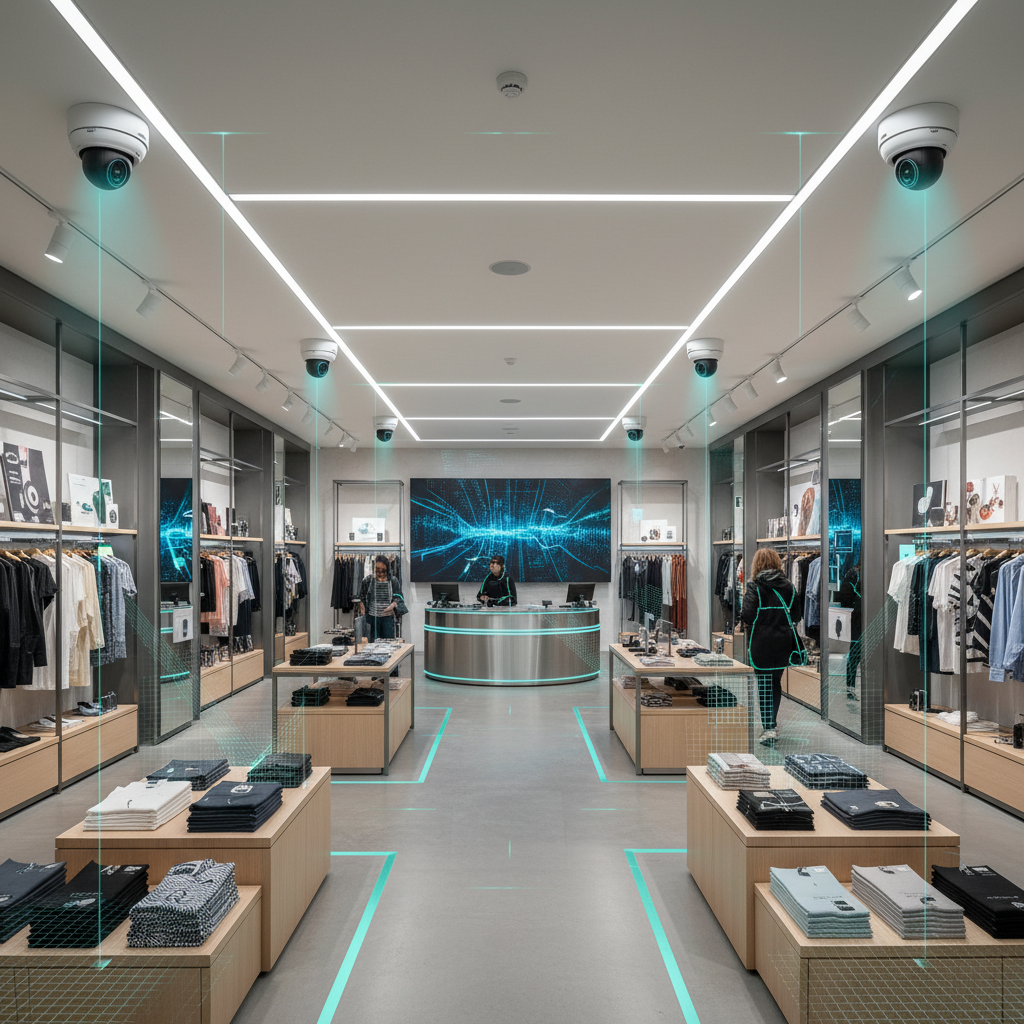
CV-powered inspection examines every product at production speed. Cameras positioned along the production line capture images of every unit, and AI models classify each as conforming or non-conforming in real time. Defective units are automatically diverted before they advance to the next production stage. The result is a fundamental shift from statistical quality control to 100% inspection, without adding labor or slowing the line.
The factory of 2024 does not sample quality. It inspects every unit, on every line, on every shift, because AI-powered vision systems make 100% inspection economically feasible for the first time.
Workforce Augmentation, Not Replacement
A persistent concern about manufacturing digital transformation is workforce displacement. The reality is more nuanced. AI augments manufacturing workers by handling the repetitive, tedious, and physically demanding inspection tasks that contribute to fatigue and error, while freeing skilled technicians to focus on problem-solving, process improvement, and complex maintenance activities that require human judgment.
At Alstom, AI-powered inspection reduced inspection time by 75%, but the inspectors were not eliminated. They were redeployed to focus on the complex, judgment-intensive aspects of rolling stock maintenance that AI cannot handle. The technology made each inspector more productive and more effective, not obsolete.
The Path Forward
Manufacturing digital transformation in 2024 is characterized by practical, proven technologies delivering measurable returns, not theoretical capabilities or pilot-stage experiments. Edge AI, 5G connectivity, IT/OT convergence, and CV-powered quality control are production-ready today. The manufacturers that gain competitive advantage will not be those who invest the most in technology, but those who deploy proven solutions fastest and scale them most effectively across their operations.
Ready to See These Results?
Book a personalized demo and see how the SAAI Suite delivers measurable outcomes for your operations.