How AI is Revolutionizing Port Operations
Global port throughput now exceeds 800 million TEUs annually, a figure that has doubled over the past two decades. Yet the infrastructure managing this colossal flow of goods often relies on processes that have barely changed since the 1990s. Manual cargo counting, paper-based compliance checks, and reactive maintenance schedules remain the norm at most terminals worldwide. The result is a staggering amount of preventable waste: in time, in money, and in operational capacity.
The emergence of AI for port operations is finally changing this equation. By layering computer vision, sensor fusion, and intelligent automation on top of existing port infrastructure, a new generation of smart port solutions is eliminating inefficiencies that the industry once considered unavoidable.
The True Cost of Manual Cargo Counting
Consider one of the most fundamental tasks at any bulk cargo terminal: counting what comes off a vessel. Traditional methods, visual estimation by tally clerks, draft surveys, grab-weight extrapolation, deliver accuracy in the range of plus or minus five tons per grab cycle. Over the course of a full vessel discharge, those errors compound dramatically.
The financial impact is severe. A single vessel can generate $50,000 to $100,000 in cargo quantity disputes between terminal operators, shipping lines, and cargo owners. Across a mid-sized port handling hundreds of vessels per year, annual losses attributable to counting inaccuracies routinely reach $2 to $3 million. These are not theoretical projections; they are line items that port CFOs know intimately but have historically accepted as the cost of doing business.
The maritime industry loses billions annually to inefficiencies that AI can now eliminate, not by replacing port workers, but by giving them real-time intelligence they have never had before.
Computer Vision on Existing CCTV Infrastructure
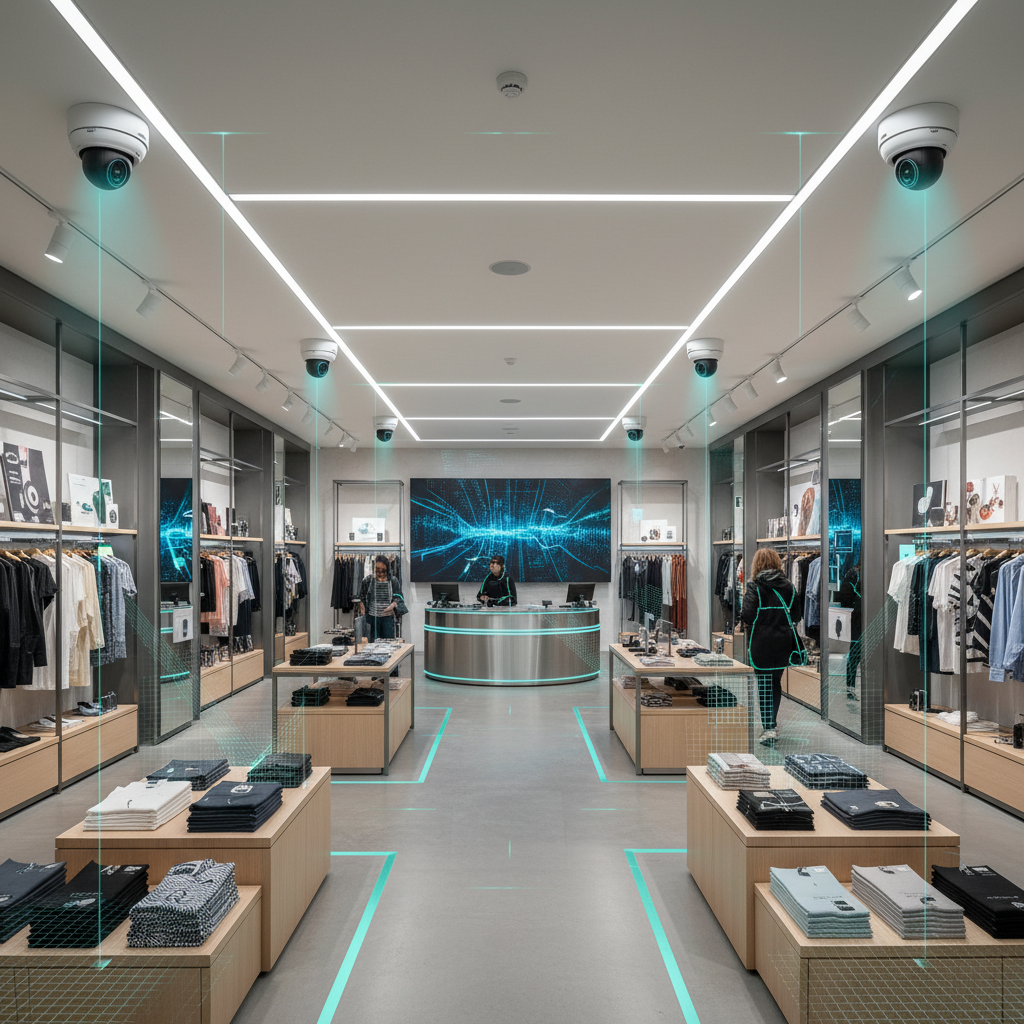
What makes modern AI for port operations particularly compelling is that it does not require ripping out existing infrastructure. The most effective solutions deploy computer vision models on CCTV cameras already installed throughout the terminal. Every port has cameras monitoring cranes, berths, yards, and gate areas. These cameras generate thousands of hours of footage that, until now, was used almost exclusively for post-incident security review.
AI transforms these passive recording devices into active operational sensors. At the crane level, for example, advanced models can perform six-state crane bucket tracking, identifying whether a grab is open, closing, closed and loaded, hoisting, traversing, or discharging. By analyzing the visual geometry of the bucket at each state and correlating it with known bucket dimensions and material densities, the system calculates cargo weight with a precision that manual methods cannot approach.
The data flows into real-time dashboards that give terminal operators, shift supervisors, and commercial teams a unified view of discharge progress, cumulative tonnage, cycle times, and variance alerts, all without installing a single additional sensor on the crane itself.
Port of Tampa: A Case Study in Automated Cargo Intelligence
The Port of Tampa provides a compelling real-world example. Facing persistent cargo disputes and seeking to modernize operations, the port deployed an AI-powered cargo counting system built on existing camera infrastructure. The results were transformative:
- 100% automated counting: no manual tally clerks required for covered operations
- Less than 1% error rate on cargo weight measurement
- 95% accuracy improvement compared to previous manual methods
- Elimination of most cargo quantity disputes with shipping lines
- Real-time discharge monitoring accessible across departments
These results were achieved not through a multi-year digital transformation program, but through a focused deployment that leveraged infrastructure the port already owned. The speed-to-value proposition is one of the strongest arguments for AI adoption in port operations.
| Metric | Manual Cargo Counting | AI-Powered Counting |
|---|---|---|
| Accuracy | ±5 tons per grab cycle | Less than 1% error rate |
| Staffing | Multiple tally clerks per shift | 100% automated |
| Disputes | $50K–$100K per vessel | Near-zero disputes |
| Monitoring | Paper-based, post-shift | Real-time dashboards |
| Accuracy improvement | Baseline | 95% improvement |
Ten AI Applications Transforming Port Terminals
Cargo counting, while impactful, represents just one of many domains where AI is creating measurable value in port operations. The following ten applications illustrate the breadth of opportunity:
- Automated Cargo Counting: Computer vision replaces manual tally with sub-1% error rates on bulk and break-bulk cargo.
- Crane Safety Monitoring: Real-time detection of unsafe crane operations, proximity violations, and load swing anomalies prevents accidents before they occur.
- Berth Utilization Optimization: AI analyzes vessel arrival patterns, discharge rates, and tidal windows to maximize berth throughput and reduce vessel waiting times.
- Vessel Tracking and ETD Prediction: Machine learning models improve estimated time of departure accuracy, enabling better resource planning downstream.
- Environmental Compliance Monitoring: Computer vision detects dust emissions, oil spills, and other environmental violations in real time, supporting regulatory compliance.
- Container Damage Detection: Automated inspection of container exteriors identifies dents, corrosion, and structural damage during gate-in and gate-out, reducing dispute resolution time.
- Yard Management Intelligence: AI-driven yard planning optimizes container stacking, reduces re-handling moves, and improves truck turn times.
- Equipment Health Monitoring: Predictive maintenance models analyze vibration, thermal, and visual data from cranes, RTGs, and reach stackers to prevent unplanned downtime.
- Security and Perimeter Monitoring: Intelligent video analytics detect unauthorized access, unattended objects, and behavioral anomalies across the terminal.
- Traffic Flow Optimization: AI manages internal terminal traffic, trucks, AGVs, straddle carriers, to reduce congestion and improve cycle times.
Automated Cargo Counting
Computer vision replaces manual tally with sub-1% error rates on bulk and break-bulk cargo.
Crane Safety Monitoring
Real-time detection of unsafe crane operations, proximity violations, and load swing anomalies.
Berth Utilization Optimization
AI analyzes vessel arrival patterns, discharge rates, and tidal windows to maximize throughput.
Vessel Tracking & ETD Prediction
ML models improve estimated time of departure accuracy for better resource planning.
Environmental Compliance
Computer vision detects dust emissions, oil spills, and other environmental violations in real time.
Container Damage Detection
Automated inspection of container exteriors identifies dents, corrosion, and structural damage.
Yard Management Intelligence
AI-driven yard planning optimizes container stacking and reduces re-handling moves.
Equipment Health Monitoring
Predictive maintenance models analyze vibration, thermal, and visual data to prevent unplanned downtime.
Security & Perimeter Monitoring
Intelligent video analytics detect unauthorized access and behavioral anomalies across the terminal.
Traffic Flow Optimization
AI manages internal terminal traffic to reduce congestion and improve cycle times.
The Smart Port Market Opportunity
The scale of investment flowing into port digitization reflects the magnitude of the opportunity. The global smart port market is projected to reach $6.1 billion by 2033, driven by volume growth, labor constraints, safety regulations, and the competitive pressure to reduce vessel turnaround times. Ports that fail to adopt intelligent automation risk losing shipping line business to terminals that offer faster, more reliable, and more transparent operations.
This is not a technology bet for the distant future. The economics are already compelling. A mid-sized bulk terminal spending $2 million annually on cargo disputes and manual counting labor can typically achieve full payback on an AI deployment within twelve months.
Why Platform Architecture Matters
The most successful port AI deployments share a common architectural principle: they are built on a unified platform rather than assembled from disconnected point solutions. When cargo counting, crane monitoring, yard management, and equipment health all share a common data layer, the insights multiply. A crane cycle time anomaly can be correlated with a specific vessel's cargo characteristics and a particular operator's shift pattern, intelligence that is impossible when each application exists in its own silo.
The Sensfix SAAI Suite embodies this platform approach. Designed specifically for industrial operations, it provides a unified foundation for deploying multiple AI applications across port infrastructure, with a common rule engine, dashboard framework, and integration layer. Rather than procuring and integrating separate solutions for each use case, terminal operators can activate new capabilities on a single platform as operational priorities evolve.
The Path Forward for Port Operators
AI for port operations is no longer an emerging concept; it is a proven capability delivering measurable returns at terminals around the world. The technology has matured past the proof-of-concept stage. The infrastructure requirements are minimal. The business cases are well established.
The question facing port operators today is not whether to adopt AI, but how quickly they can deploy it, and whether they choose a fragmented collection of point tools or a cohesive platform that scales across the full spectrum of terminal operations. In an industry where every hour of vessel delay costs tens of thousands of dollars, the answer should be clear.
Ready to See These Results?
Book a personalized demo and see how the SAAI Suite delivers measurable outcomes for your operations.