
Sensfix Applied AI Blueprint
Applied AI Blueprint: Port & Maritime Operations
How Proven Multimodal AI Capabilities Address Port Infrastructure Challenges Beyond Cargo Operations
Beyond Cargo Counting: The Full Spectrum of Port AI
Most port AI conversations start and end with cargo tracking. But a modern container port is a complex industrial campus: cranes, quay walls, fender systems, bollards, rail infrastructure, fuel storage, electrical substations, warehouses, and kilometers of pavement all require continuous monitoring and maintenance.
Sensfix has proven its SAAI platform in production at a major US Gulf Coast port for cargo operations: crane cycle monitoring, truckload counting, and cargo settlement reconciliation with <1% error rate. This Blueprint extends the same proven capabilities to the infrastructure and equipment domains that surround cargo operations, where the same AI that watches cranes can also watch the port itself.
Port Infrastructure Damage Inspection
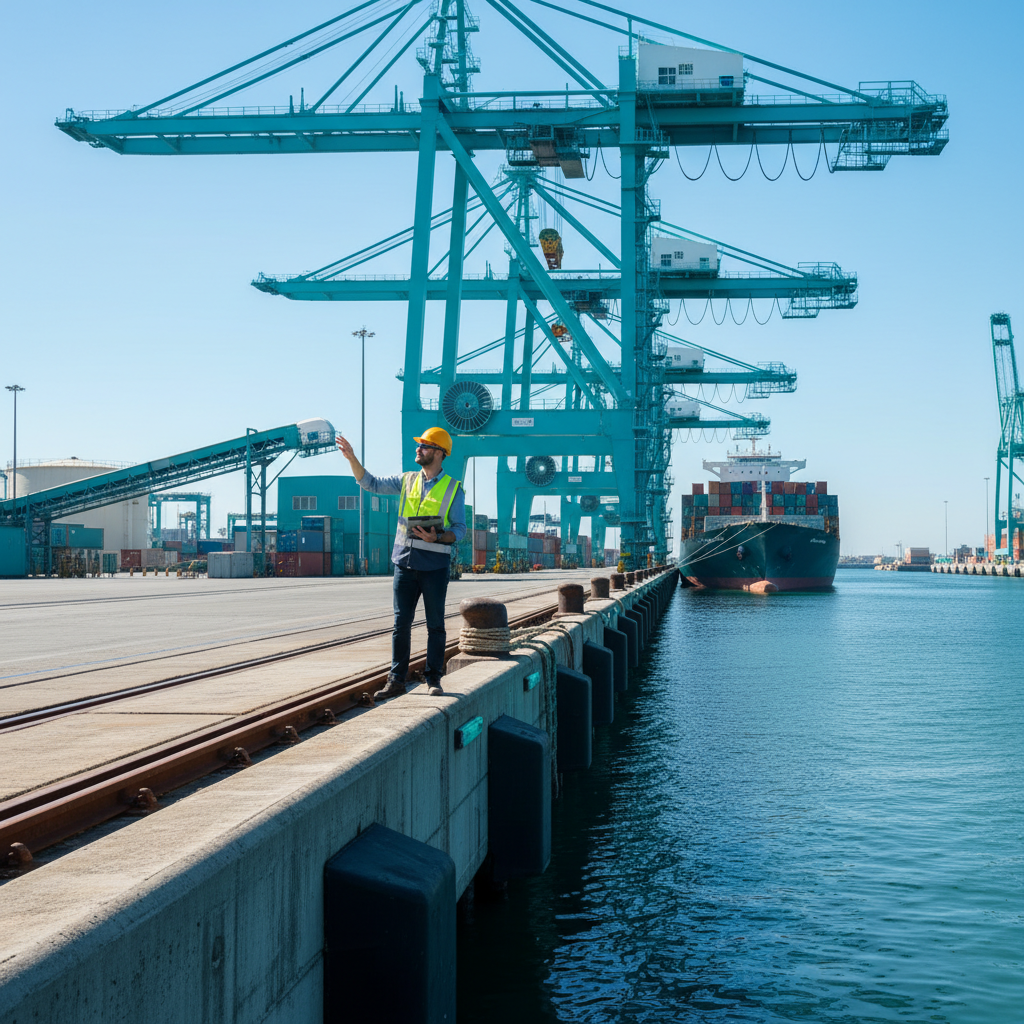
The Reality
Port infrastructure (quay walls, fender systems, bollards, crane rails, paving, and drainage systems) takes continuous punishment from vessel berthing impacts, heavy vehicle traffic, salt spray corrosion, and weather exposure. Damage accumulates invisibly between scheduled engineering inspections, which may occur quarterly or annually. A cracked bollard, a deteriorating fender panel, or a settling crane rail doesn't announce itself. It fails under load: when a vessel is berthing, when a container stack is being transferred, when a storm surge tests every structural element simultaneously.
What Peer Ports Face
- Quay wall inspections require divers or drone access, expensive and infrequent
- Fender damage from vessel impacts often goes unreported by ship masters
- Crane rail settlement causes alignment issues that cascade into operational slowdowns
- Pavement deterioration under RTG and straddle carrier traffic creates safety hazards
The Proven AI Capability
42+ proprietary defect detection models identify cracks, corrosion, spalling, deformation, and surface deterioration from standard camera imagery. At a major train manufacturer, sub-millimeter dimensional measurement detects brake pad wear below tolerance. The same precision CV pipeline applied to port infrastructure detects quay wall surface cracking, fender compression damage, bollard base erosion, and rail alignment deviation from fixed cameras or mobile inspection rounds.
How It Works at a Port
Fixed cameras on crane structures (already deployed for cargo monitoring) are dual-purposed for infrastructure scanning during idle periods. Mobile inspection teams use the Sensfix app during routine rounds to capture images of bollards, fender panels, and drainage grates. AI classifies damage severity instantly. The Multimodal Rule Engine triggers escalation when critical thresholds are breached ("If quay wall crack width > 10mm, escalate to structural engineer + create priority work order").
Applicable Modules
Port Equipment Health Monitoring
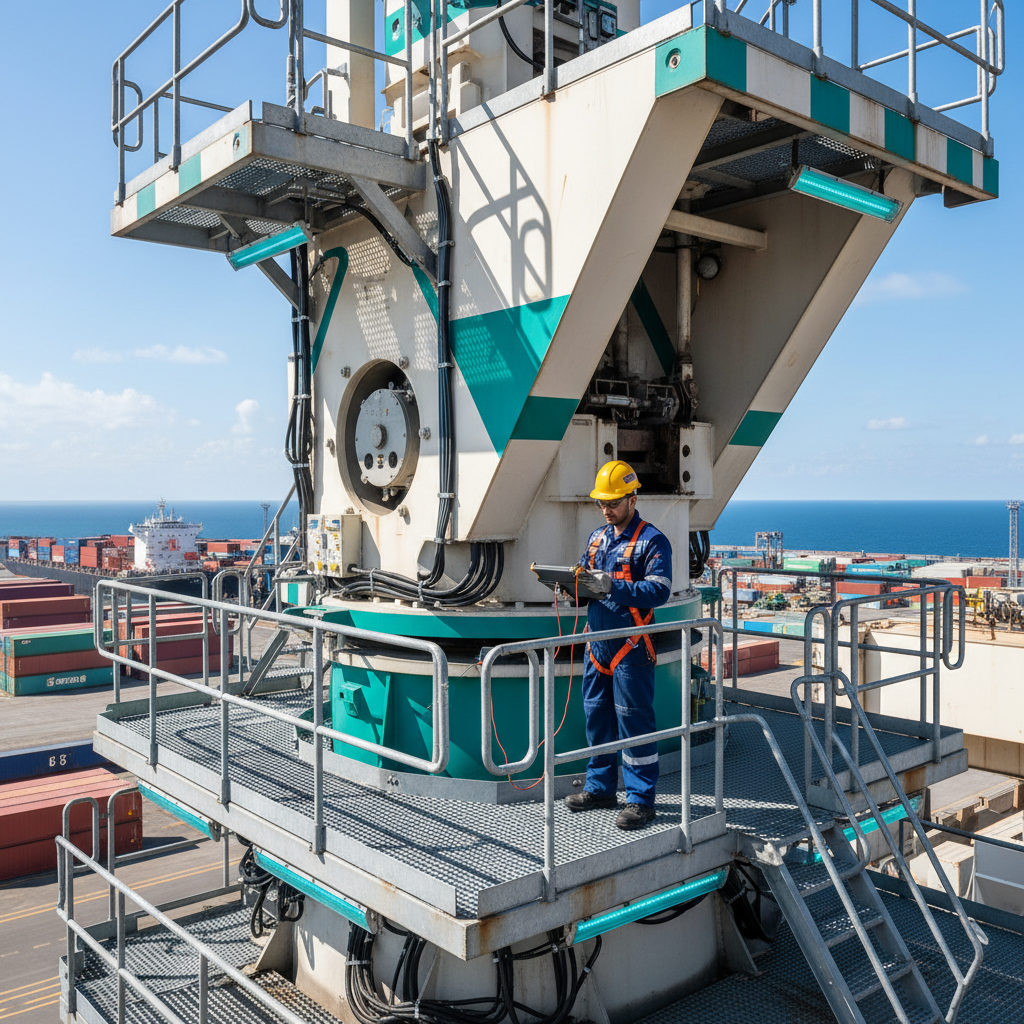
The Reality
Ports operate some of the largest and most expensive mobile equipment in any industrial setting: ship-to-shore cranes ($10M+), RTG cranes ($2-3M), straddle carriers ($1.5M+), reach stackers, terminal tractors, and reefer power units. Unplanned equipment failure during vessel operations cascades into berth delays, demurrage charges, and schedule disruptions across the entire terminal. Preventive maintenance on port equipment is typically calendar-based: every X hours or every Y months. This means lightly-used equipment gets serviced too often (wasting resources) while heavily-used equipment is serviced too late (risking failure).
What Peer Ports Face
- STS crane motor failures halt an entire berth lane
- RTG spreader mechanism issues cause container drops
- Reefer power unit failures risk spoiling temperature-sensitive cargo
- Terminal tractor fleets require coordinated maintenance across 50-200+ vehicles
The Proven AI Capability
At a 5G-connected manufacturing facility in Poland, vibration sensors sampling at 5KHz on production-critical motors feed predictive maintenance models that detect bearing wear, imbalance, and misalignment weeks before failure. At a major train manufacturer, audio AI monitors compressor health by comparing operating sounds against factory baselines. Both capabilities apply directly to port equipment: crane hoist motors, RTG drive systems, spreader hydraulics, and terminal tractor engines.
How It Works at a Port
Vibration sensors on critical crane motor assemblies feed continuous data to the SAAI platform. Audio AI installed in crane cabins or on crane structures captures motor and hydraulic sounds during operation. The system learns the healthy acoustic signature of each crane and alerts when deviations indicate developing faults. ServiceOCRPro reads diesel generator panels, hydraulic pressure gauges, and reefer unit displays during routine rounds, building a continuous digital record that replaces paper logs.
Applicable Modules
Warehouse & Storage Yard Monitoring
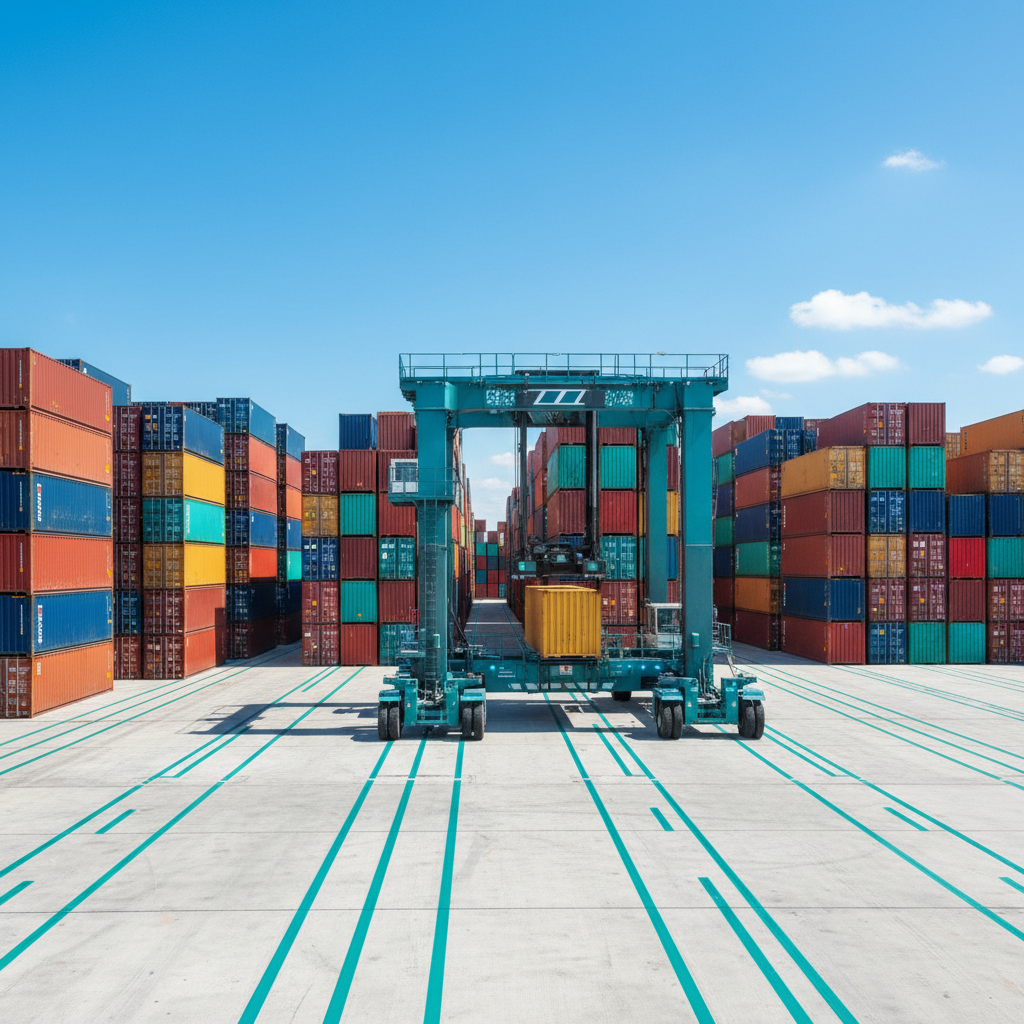
The Reality
Port warehouses and container storage yards are high-density environments where inventory location accuracy, access control, and condition monitoring are constant challenges. Containers in wrong slots delay retrieval. Unauthorized access to bonded cargo areas creates compliance risk. Temperature excursions in reefer container blocks can destroy perishable cargo worth millions.
The Proven AI Capability
Real-time multi-object tracking from CCTV feeds, proven at the same port facility for crane and truck monitoring, extends naturally to warehouse and yard monitoring. Computer vision tracks container movements, identifies slot occupancy, and monitors personnel activity. At a European retail chain, centralized compliance monitoring across multiple store locations delivers daily and weekly performance dashboards to management. The same reporting architecture serves multi-warehouse port operations.
Applicable Modules
Port Safety & Compliance Automation
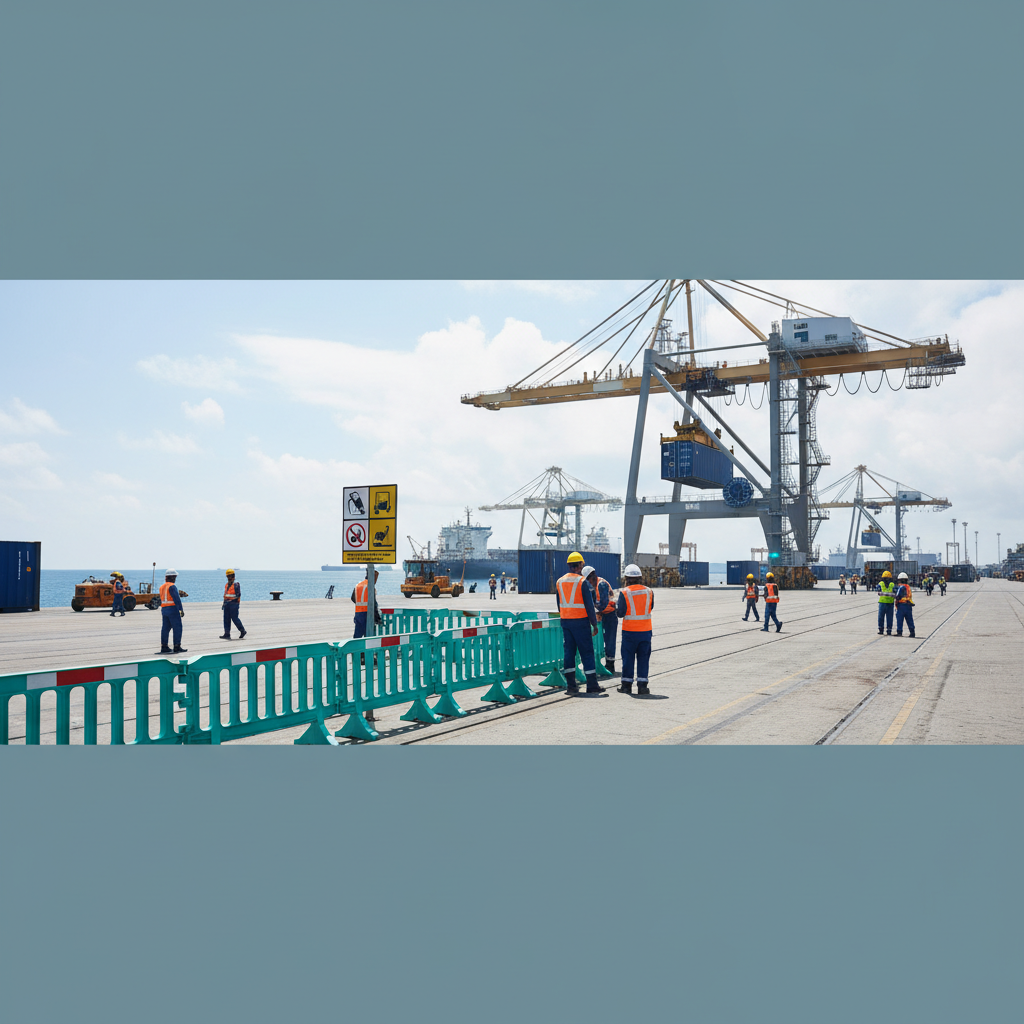
The Reality
Ports operate under strict safety regulations: PPE enforcement, exclusion zones around active cranes, vehicle speed limits in pedestrian-shared areas, hazardous cargo handling protocols, and emergency evacuation procedures. Compliance monitoring is typically observation-based, with safety officers doing periodic walkthroughs.
The Proven AI Capability
At the same US Gulf Coast port, the SAAI platform already enforces safety zones around active crane operations, detecting when personnel enter restricted areas and triggering immediate alerts. This same zone-based rule engine extends to: PPE detection (hard hats, high-visibility vests, safety glasses), vehicle speed monitoring in restricted zones, hazardous cargo area access control, and emergency muster point monitoring during drills.
Applicable Modules
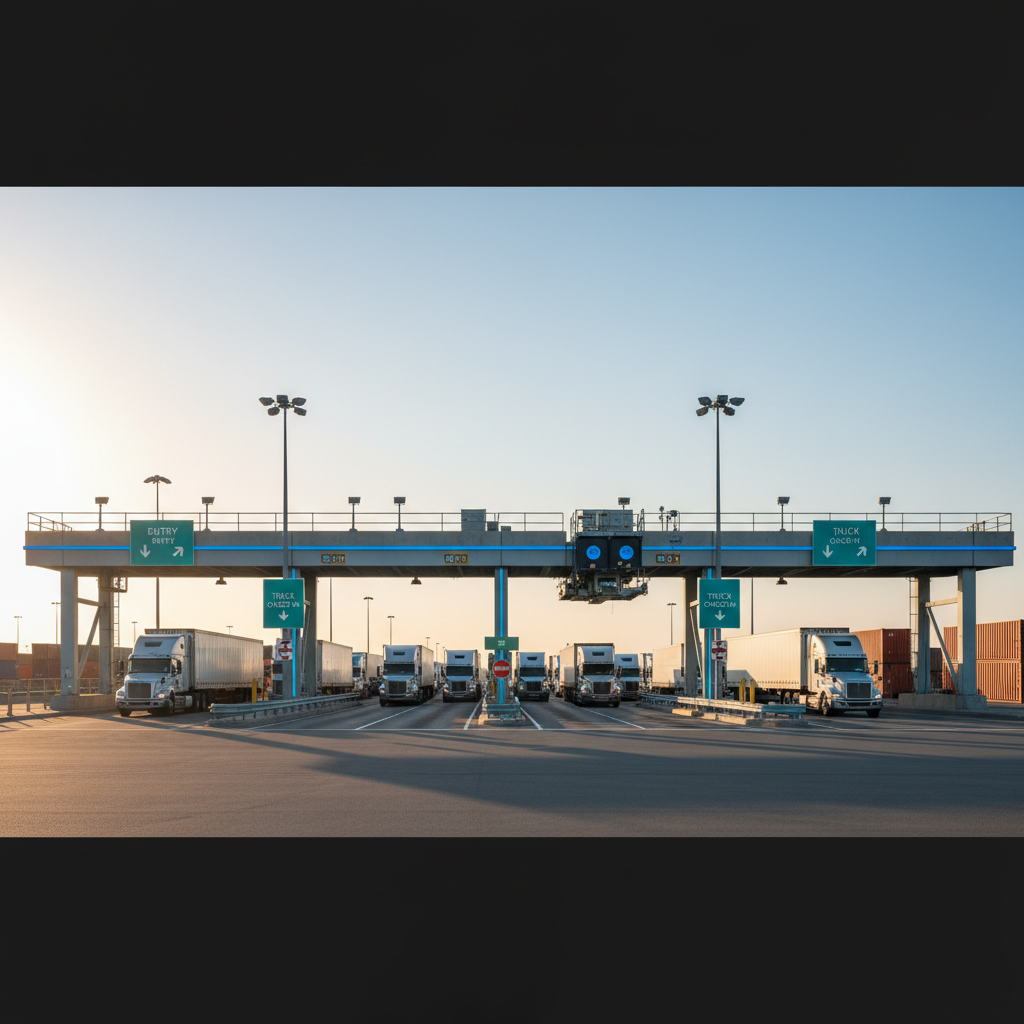
Gate & Vehicle Flow Management
The Reality
Port gate operations are bottleneck points: truck queues during peak hours, driver documentation verification, container number recognition, and seal integrity checks all compete for limited gate capacity. Every minute a truck waits in queue is a cost to the haulier and a friction point in the supply chain.
The Proven AI Capability
Computer vision that tracks vehicle movements and counts throughput with <1% error is production-proven at the port facility. Extending this to gate operations means: automated container number recognition via OCR, truck queue length monitoring with wait-time estimation, seal integrity visual verification, and chassis condition screening, all from existing gate cameras.
Applicable Modules
Proven At Scale
| Capability | Where Proven | Port Application |
|---|---|---|
| Crane cycle monitoring, <1% error | US Gulf Coast port (production) | Cargo ops baseline |
| 42+ defect detection models | Industrial facilities, 3 continents | Infrastructure damage inspection |
| Audio AI for machinery health | Train manufacturer (compressors) | Crane motor health monitoring |
| Vibration predictive maintenance | 5G manufacturing facility (5KHz) | Crane and RTG drive systems |
| Automated gauge/meter OCR | Industrial + wastewater facilities | Generator panels, hydraulic gauges |
| Safety zone enforcement | US Gulf Coast port (production) | PPE, exclusion zones, speed limits |
| Multi-site compliance dashboards | European retail chain | Multi-warehouse operations reporting |
| Digital workflows with evidence | Train maintenance depots | Equipment maintenance SOPs |
Implementation Approach
Phase 1: Extend Existing Deployment (30-60 Days)
For ports where Sensfix is already deployed for cargo operations, infrastructure and equipment monitoring is an extension: the cameras and platform are already in place. Additional AI models are deployed on existing feeds, vibration sensors added to critical crane motors, and inspection workflows digitized.
Phase 2: Enterprise Coverage
Full port campus monitoring under a single annual platform fee: unlimited users, unlimited cameras, unlimited data nodes. Every crane, every warehouse, every gate, every piece of mobile equipment monitored through one dashboard.