
Sensfix Applied AI Blueprint
Applied AI Blueprint: Hotel Operations
How Proven Multimodal AI Capabilities Address 19 Hotel Maintenance & Operations Domains
The $30 Billion AI Opportunity in Hotel Operations
The global hotel industry spends over $30 billion annually on energy alone, with each room consuming $2,196 per year while sitting vacant 70% of the time between 10 AM and 8 PM. Housekeeping faces a 65% staffing shortage, the hardest hospitality position to fill with a 38% vacancy rate. The average time to receive, classify, and dispatch a maintenance issue is 21 minutes (JLL benchmark). Every metric points to an industry ripe for AI transformation, and the leading brands are already moving.
Marriott committed $1.1 billion+ in technology spending for 2026 with an AI Incubator processing 150+ use cases. PathSpot signed a strategic agreement with Marriott spanning 9,300+ properties for kitchen hygiene monitoring. Hilton's LightStay sustainability program has delivered $1 billion+ in cumulative energy savings. The Cosmopolitan of Las Vegas found that guests who engage with their AI concierge spend 30% more and are 33% happier. The question for hotel operators that haven't yet deployed AI is not whether to adopt; it's how to avoid building a fragmented multi-vendor technology stack that creates as many integration problems as it solves.
Sensfix is already deployed across 46 enterprise clients on 3 continents: monitoring infrastructure at a major US port, managing maintenance at the world's second-largest train manufacturer, and digitizing operations for a European retail chain with 4,600+ stores. The SAAI platform is the only system unifying computer vision, audio AI, IoT, and workflow automation in a single suite. 42+ proprietary AI models have been trained across industrial facilities globally. This Blueprint documents how every one of those proven capabilities maps to a specific hotel operations domain.
$30B+
Annual global hotel energy spend
65%
Staffing shortage in housekeeping
$2,196
Energy cost per room per year
21 min
Avg. maintenance issue classification
$1.1B+
Marriott 2026 tech investment
4%
Monthly quit rate in hospitality
Room Cleanliness Verification
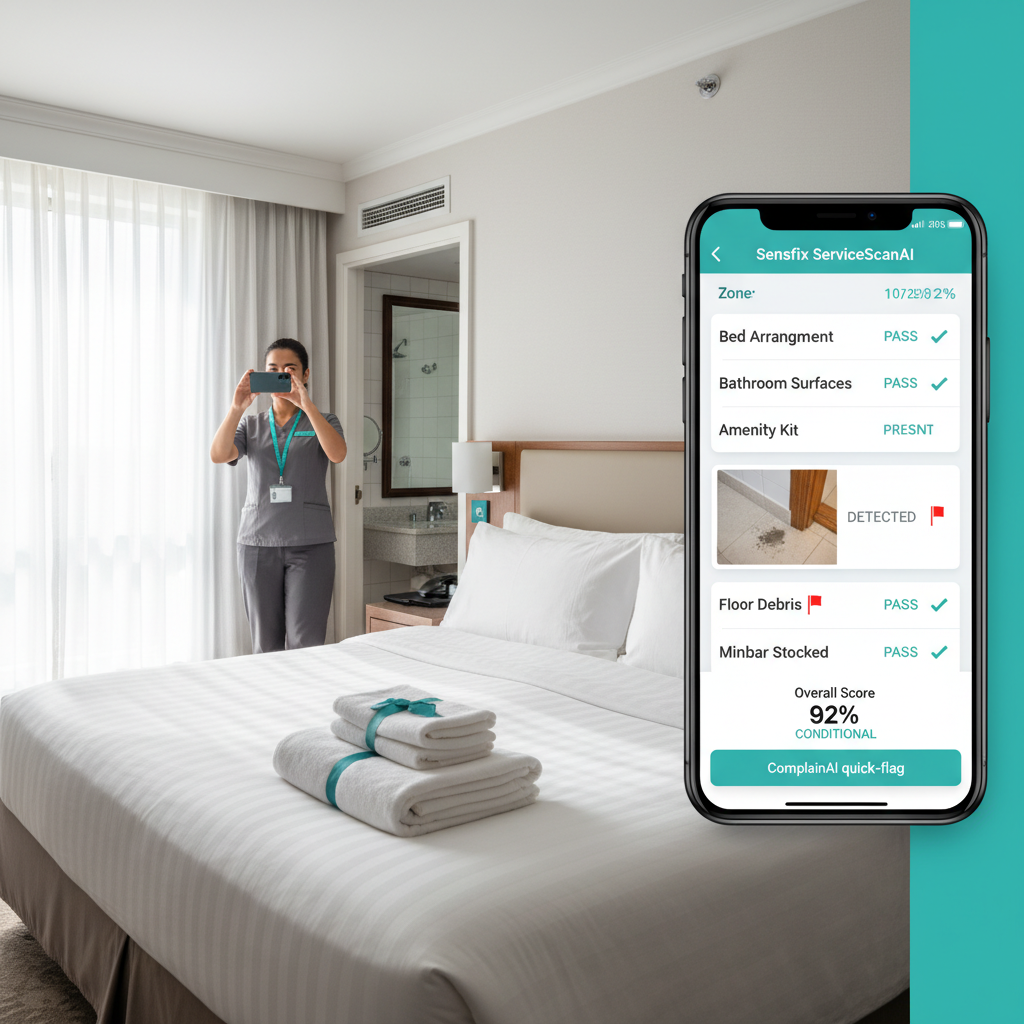
The Problem
Supervisors physically walk each room against mental or paper checklists, inspecting only 10–30% of rooms due to time constraints. A supervisor spends approximately 15 minutes per room. Subjective judgment causes inconsistency; room status is “declared” rather than “evidenced.” Hotels face a 65% staffing shortage, with housekeeping the hardest position to fill at a 38% vacancy rate.
What Leading Hotels Report
| Deployment | Scope | Result |
|---|---|---|
| Fari Lens (CV platform) | Room cleanliness verification via computer vision | Missed issues reduced from 22% to 2%; guest reported issues dropped from 18 to 3/month; review ratings improved from 4.1 to 4.7/5 |
| HelloShift | Digital housekeeping management | 30% faster room turnover, 7.4% housekeeping cost decrease |
| Narola AI | AI-powered cleaning verification | $150K–$300K annual savings for a 300-room hotel |
How Sensfix Approaches This Differently
ServiceScanAI scans rooms via smartphone, the same mobile computer vision platform proven at a European retail chain (4,600+ stores) for shelf compliance verification. No dedicated cameras or sensors required; housekeeping staff use the devices they already carry.
ReportAI lets staff flag issues instantly with a photo scan; TaskflowDigitizerAI digitizes housekeeping SOPs with mandatory photo evidence at every step. 42+ proprietary defect models detect stains, debris, missing amenities, and damage, producing a per-area score and overall pass/fail with annotated frames.
The critical difference from point solutions: the same platform that verifies room cleanliness also monitors HVAC health, tracks maintenance workflows, and manages guest reported issues. One investment serves the entire property, not just housekeeping.
Linen & Towel Quality Detection
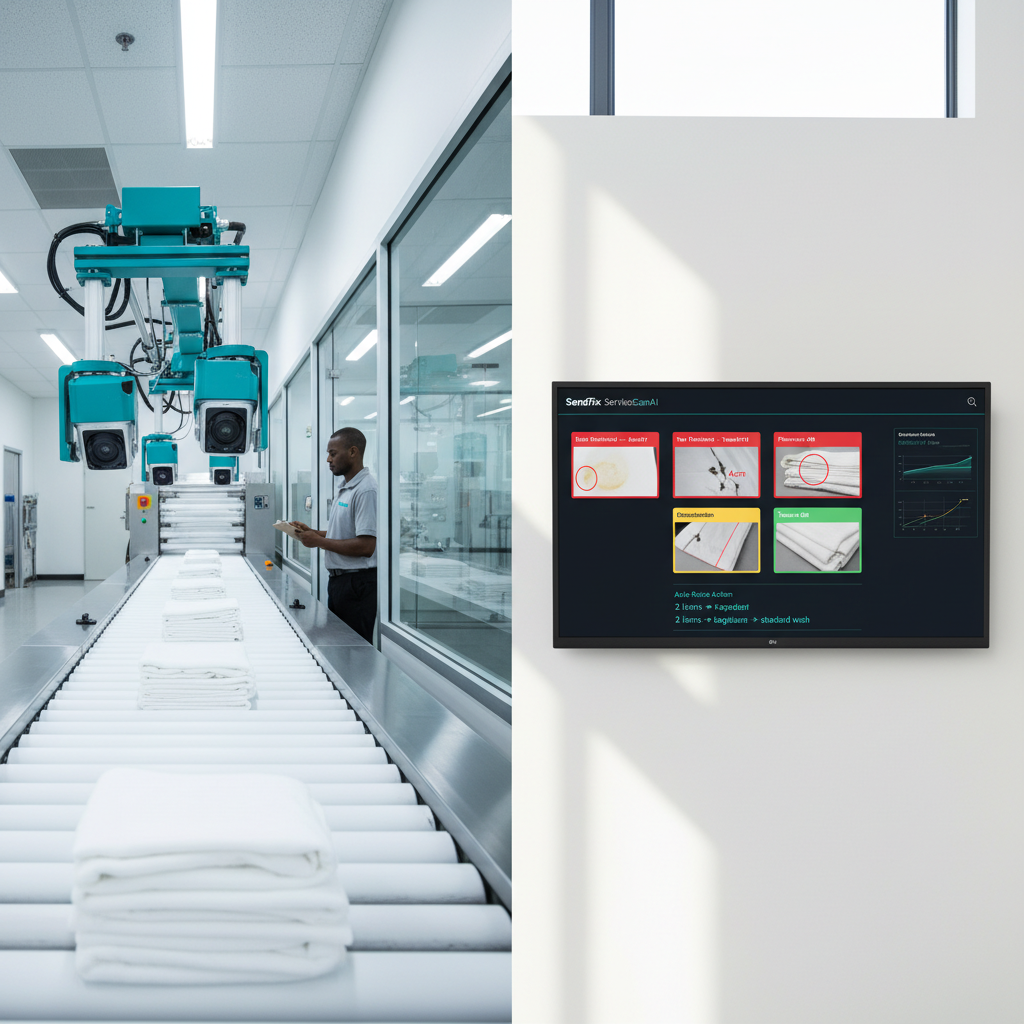
The Problem
Manual visual inspection by laundry staff catches only 50–70% of defects. Damaged linens frequently reach guest rooms, causing reported issues and brand damage. Batch-processing all textiles regardless of soil level wastes water, energy, and chemicals. Hotels spend $50,000–$150,000 annually on linen replacement alone.
Real-World Performance Data
| Technology | Scope | Result |
|---|---|---|
| UCZ E.I.R.S. System (UK) | Machine vision for textile stain recognition | Recognizes, locates, and categorizes stains at speed with robotic arms for targeted treatment |
| Robro Systems (KWIS) | Industrial textile defect detection | 99.95% accuracy, reducing wastage by 45–70% |
| Academic validation (Springer 2024) | CNN-based hotel linen defect classification | 98.91% accuracy on hotel linen defects |
The Cross-Industry Advantage
ServiceScanAI's defect detection models, proven on industrial infrastructure inspections (Port of Tampa crane welds, Bay Area automaker body panels), adapt to textile surface analysis. The same CNN architectures that detect cracks and corrosion on steel detect stains and tears on fabric. The models generalize because the underlying task is identical: surface anomaly detection.
The Multimodal Rule Engine auto-routes defective items for targeted treatment versus standard wash, reducing chemical usage and extending linen lifecycle. No dedicated textile inspection hardware required; high-resolution cameras integrated into existing laundry processing lines provide the image feed.
Minibar & In-Room Amenity Tracking
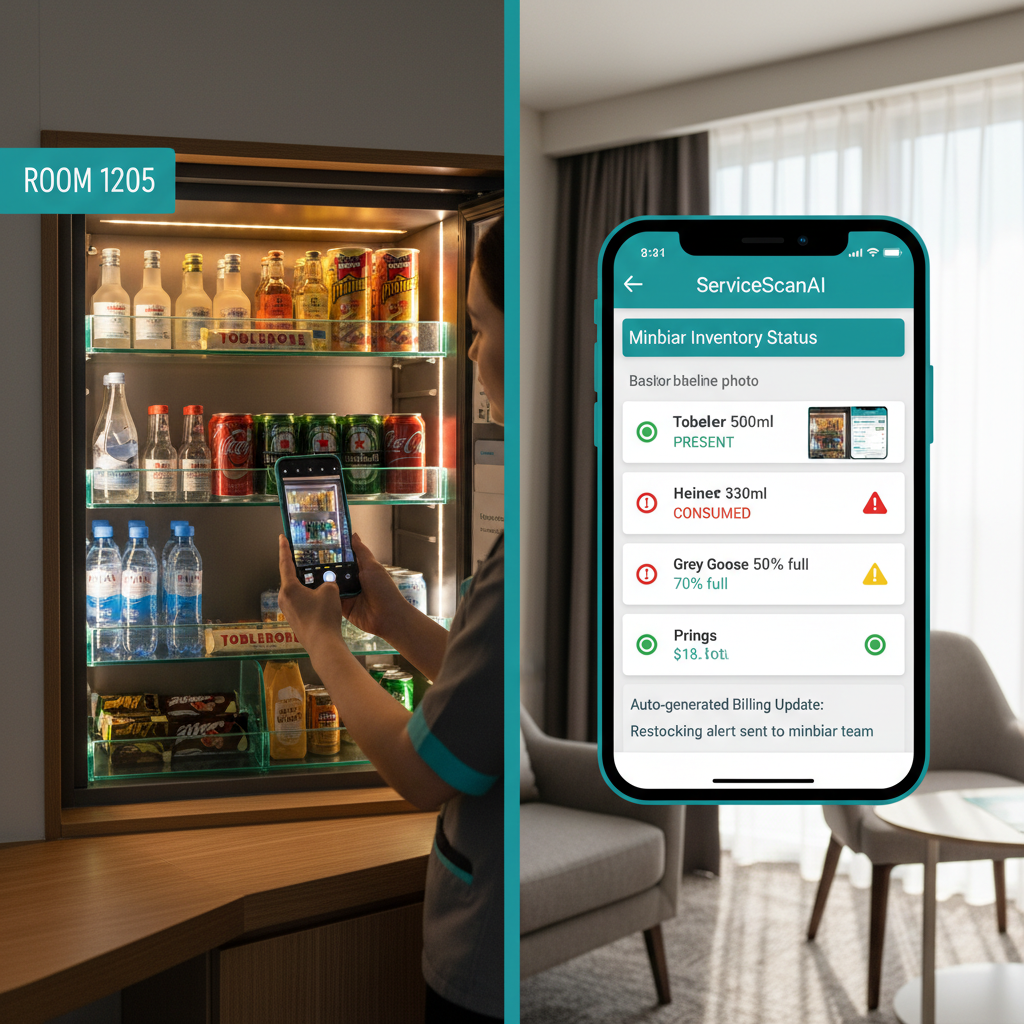
The Problem
Staff physically check each minibar daily (5–10 minutes per room), requiring room entry that disturbs guests. Error rates are high, and 30–40% of consumption charges go uncaptured. Checkout disputes are frequent and costly to resolve.
What Leading Hotels Report
| Deployment | Scope | Result |
|---|---|---|
| Bartech Systems (Las Vegas) | 60+ countries; Hilton, Marriott, Hyatt, Jumeirah, Kempinski, Pan Pacific | 95%+ consumption charges captured (vs. 60–70% manual); ROI in 12–18 months |
| Fari Lens | Emerging CV approach to minibar reconciliation | Photo differencing for consumption detection |
How Sensfix Delivers This Without Dedicated Hardware
ServiceScanAI photographs minibar contents and compares against stored baselines, the same image-to-image comparison logic used for room damage detection. No sensor-equipped shelves or weight-based detection units required.
The Multimodal Rule Engine triggers restocking alerts and auto-updates billing systems. Housekeeping captures a single photo during room turnover; the AI identifies consumed items, updates inventory, and generates the charge, eliminating unnecessary room entries during guest stays.
The same baseline comparison capability proven at Bay Area automaker for vehicle body panel damage detection applies directly to minibar reconciliation. One platform, one photo, multiple revenue-protecting outcomes.
Room Damage Detection & Asset Protection
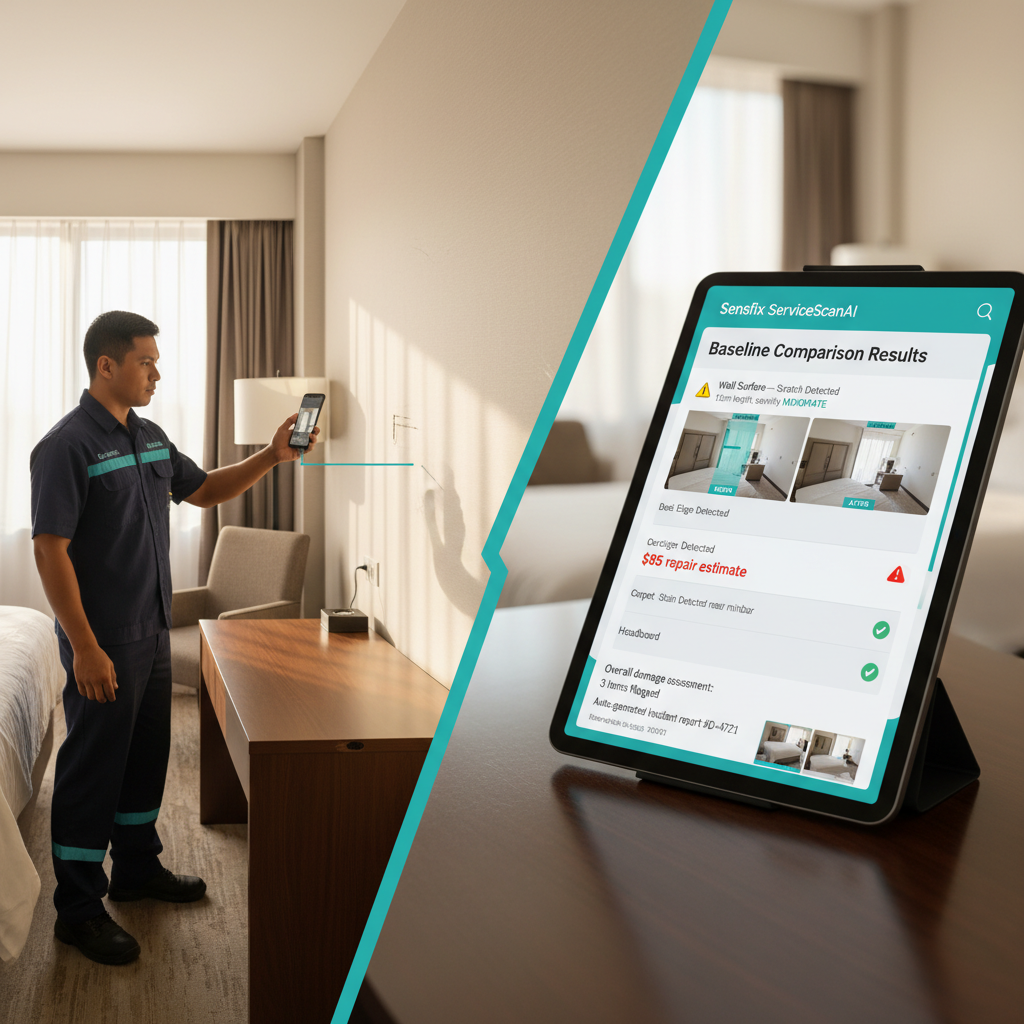
The Problem
Visual walk-through by housekeepers notes only obvious damage on paper. No photographic baseline exists; disputes over pre-existing versus new damage are impossible to resolve. Unauthorized parties cause an average of $1,560 in damages per incident, with some reaching $25,000. Less than 5% of post-stay photos are manually reviewed.
Where This Technology Is Proven
| Deployment | Scope | Result |
|---|---|---|
| RapidEye / Breezeway | 270,000+ properties in 90 countries | 1.6 million+ photos processed for property condition |
| Car rental industry (Hertz, Sixt) | Automated vehicle damage scanning | Leading hospitality; industry following the same trajectory |
The Sensfix Advantage
ServiceScanAI's baseline comparison capability, the same technology used at Bay Area automaker for vehicle body panel damage detection, applies directly to room furnishings. Post-checkout photos are compared against a stored "golden record" baseline using semantic change detection that flags meaningful changes while ignoring lighting and angle differences.
42+ proprietary defect models detect scratches, stains, and missing items. ReportAI lets housekeeping flag damage instantly; TaskflowDigitizerAI generates repair workflows with photo evidence. The result: irrefutable timestamped evidence for insurance claims and guest disputes.
HVAC Compressor Sound Anomaly Detection
The Problem
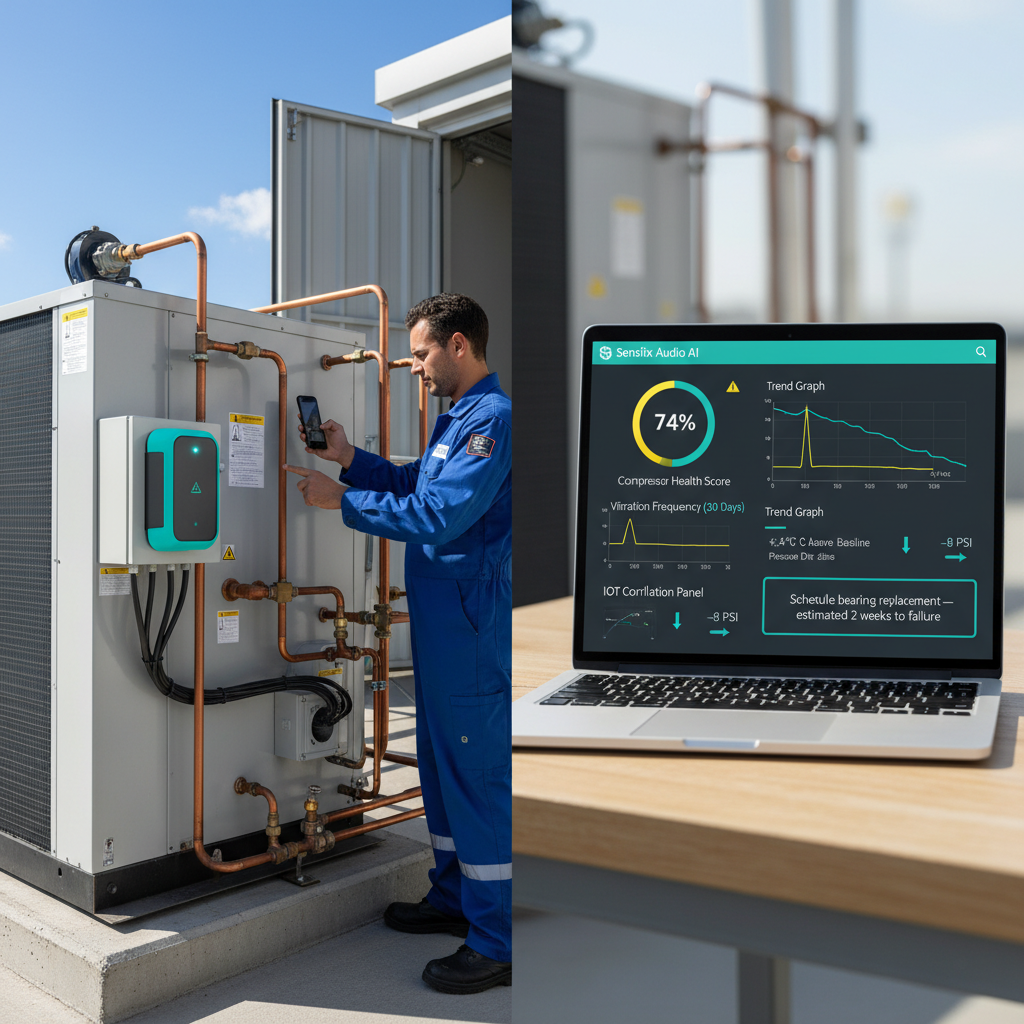
Reactive “run-to-failure” approach where problems are discovered only when compressors fail or guests report temperature issues. No early warning system exists. Unplanned HVAC downtime causes guest comfort issues and emergency repair costs 60–70% higher than planned maintenance. Emergency chiller failures in hotels cost $80,000+ per incident.
What Leading Hotels Report
| Deployment | Scope | Result |
|---|---|---|
| BrainBox AI at Holiday Inn | Autonomous HVAC optimization across 4,000+ buildings globally | 15.8% HVAC energy savings at 45 Broadway NYC; 42.7% HVAC electricity reduction at Meera Tower; installs in less than half a day |
How Sensfix Detects Problems Before They Happen
Audio AI Rule Engine detects compressor anomalies 2–4 weeks before breakdown, using the same acoustic fingerprinting technology proven at the world's second-largest train manufacturer for compressor health monitoring on rolling stock. IoT sensors on compressor housings continuously monitor vibration frequencies and power consumption.
ML algorithms establish normal operating profiles and detect subtle drifts indicating slow refrigerant leaks or mechanical wear. The Multimodal Rule Engine correlates audio anomalies with IoT sensor data (temperature, pressure) for comprehensive diagnostics. Hotels get actionable intelligence: "Compressor 3 in Building B shows early bearing wear; schedule replacement in next maintenance window," instead of emergency calls at 2 AM.
Elevator & Vertical Transport Monitoring
The Problem
Monthly or quarterly scheduled maintenance visits regardless of actual condition. Breakdowns cause guest inconvenience and emergency repair costs of $3,500–$8,000 per incident. Hotels with high-rise towers are especially vulnerable; elevator downtime directly impacts guest experience and online reviews.
Real-World Performance Data
| Deployment | Scope | Result |
|---|---|---|
| KONE 24/7 Connected Services | Tens of thousands of units globally, explicitly targeting hotels | 70% more fault detection, 40% fewer equipment issues |
| Datahoist | Patent-pending predictive analytics via vibration and acceleration | Early degradation detection before service calls |
| Academic research (Nature 2024) | AI elevator optimization models | 15% improvement in wait times, 20% reduction in energy use |
Why One Platform Beats Proprietary OEM Analytics
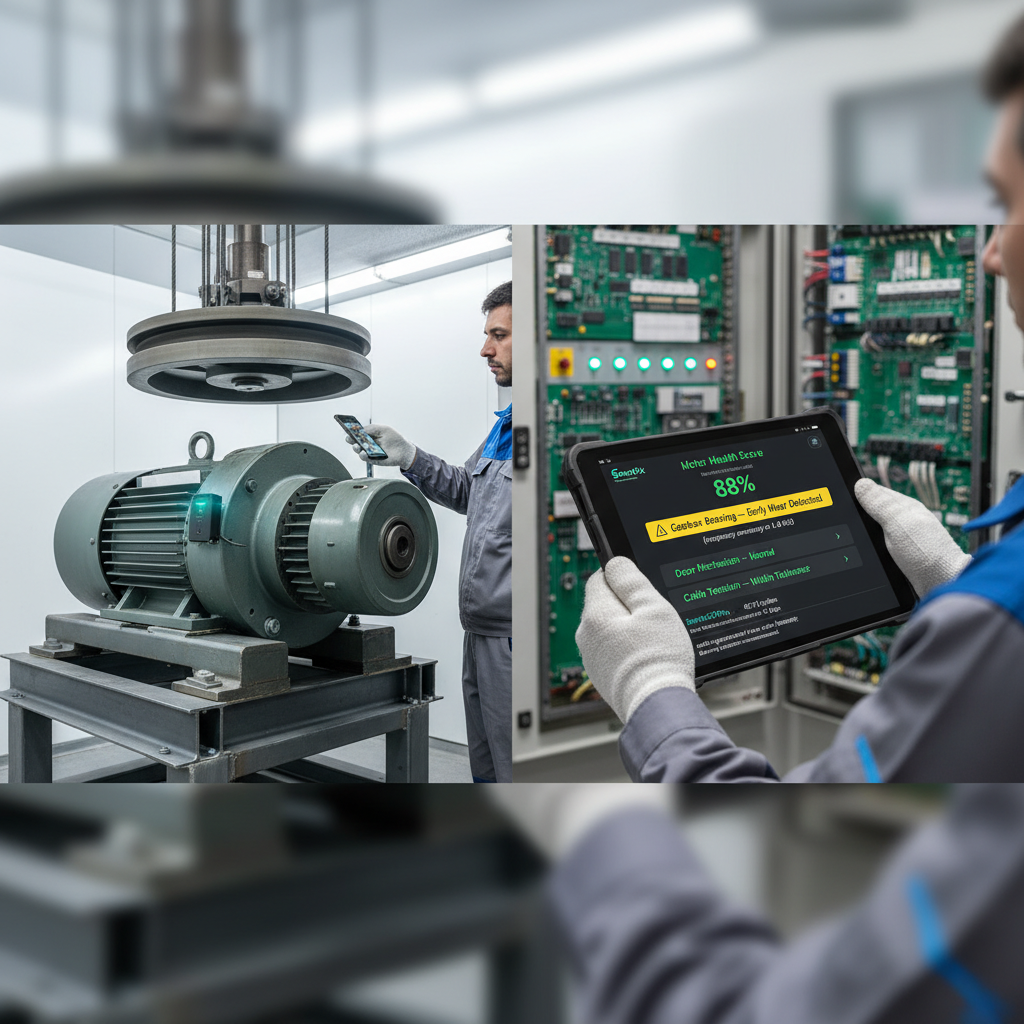
KONE's connected services only work on KONE elevators. Most hotels have mixed-vendor elevator fleets across different buildings and installation eras. Sensfix is hardware-agnostic: Audio AI monitors any elevator motor, any gearbox, any manufacturer.
Audio AI Rule Engine monitors elevator motor and door mechanism sounds, the same rotating-machinery acoustic analysis proven at the world's second-largest train manufacturer. ServiceOCRPro reads elevator panel displays (proven at Cadagua wastewater for industrial gauge reading). TaskflowDigitizerAI digitizes manufacturer maintenance SOPs with photo evidence at each step.
The result: predictive maintenance across the entire vertical transport fleet from a single platform, regardless of which OEM manufactured each unit.
Food Waste Tracking & Kitchen AI
The Problem
Manual tracking via clipboards or no tracking at all, with accuracy around 70%. The average hotel kitchen wastes 4–15% of all food purchased with zero actionable data. Nine out of ten foodborne illness outbreaks relate to poor handwashing (CDC).
What Leading Hotels Report
| Deployment | Scope | Result |
|---|---|---|
| Winnow Vision | 3,000+ kitchens in 90+ countries | 40–70% waste reduction; $100M+ prevented annually |
| Mandarin Oriental (4 pilot hotels) | AI food waste tracking | 36% waste reduction, 66 tons eliminated, $207K annualized savings |
| Marriott UK/Ireland/Nordic | Chain-wide AI waste monitoring | 25% waste reduction in 6 months |
| Iberostar (20+ properties) | Resort food waste AI | 533,000 meals saved, $7M+ projected annual savings |
| Hilton Tokyo Bay | Pilot deployment | 30% reduction in 4 weeks |
How Sensfix Delivers This as Part of a Complete Platform
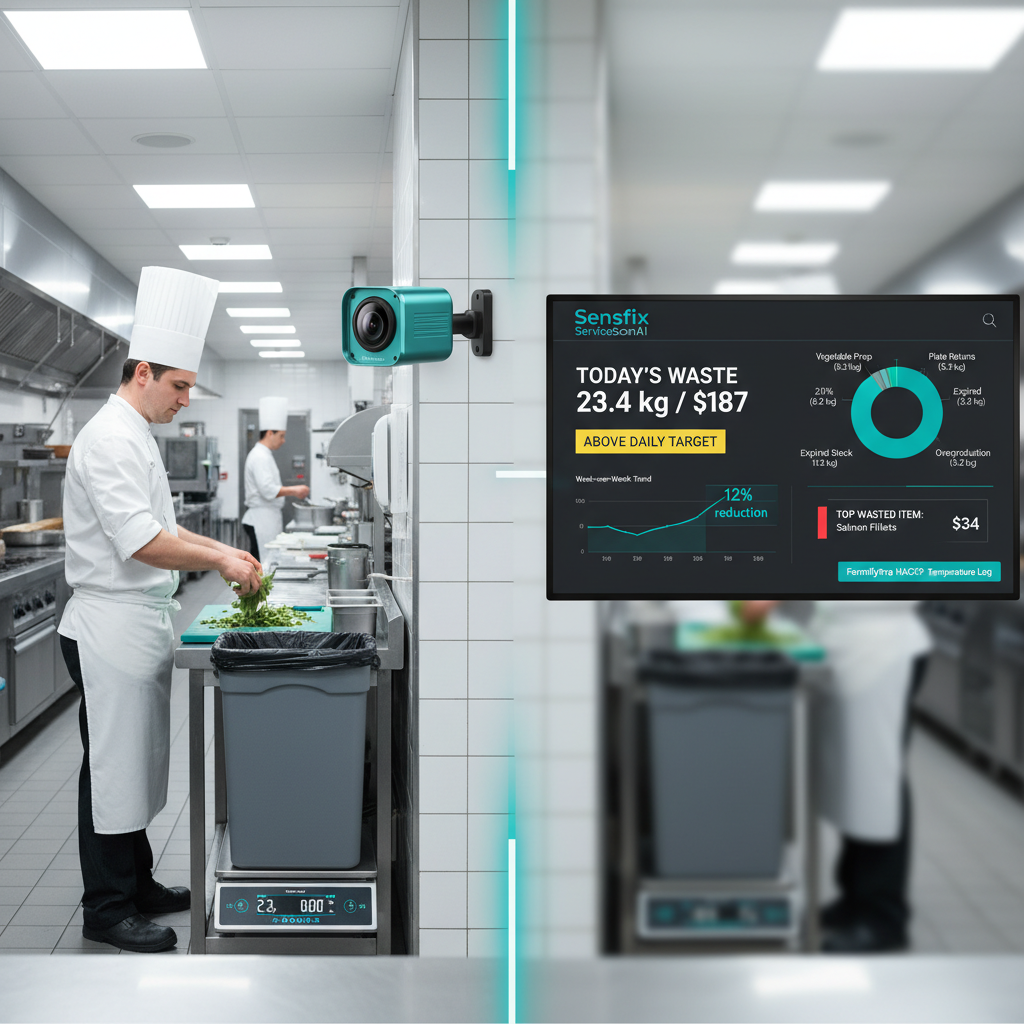
ServiceScanAI's object detection models, trained on 42+ defect categories across industrial environments, adapt to food item identification. AI cameras positioned above waste bins automatically identify, classify, and weigh food as it is discarded. Data feeds a cloud dashboard showing waste by item, weight, cost, reason, and time period.
FormifyPro digitizes HACCP temperature logging. The Multimodal Rule Engine triggers automated alerts when waste exceeds set thresholds. The critical differentiator: Winnow is a dedicated food waste platform. Sensfix delivers food waste tracking alongside kitchen hygiene monitoring, equipment maintenance, and building operations, all from the same suite.
Kitchen Hygiene & Food Safety Compliance
The Problem
“Employees must wash hands” signs with no verification mechanism. CDC data shows 9 out of 10 foodborne illness outbreaks relate to poor handwashing. Manual monitoring consumes 2–8 hours daily of back-of-house supervisor time. Health code violations can result in closure, lawsuits, and brand damage.
Named Deployments with Results
| Deployment | Scope | Result |
|---|---|---|
| PathSpot × Marriott | Strategic agreement across 9,300+ properties; minority equity investment | 95% non-contaminated scan rate, 25% decrease in employee sick days, 110% compliance with FDA codes |
| Dragontail Systems (acquired by Yum! Brands for $72.3M) | PPE detection across 2,500+ stores | 98.9% sensitivity for PPE/uniform compliance |
How Sensfix Delivers This from Existing Cameras
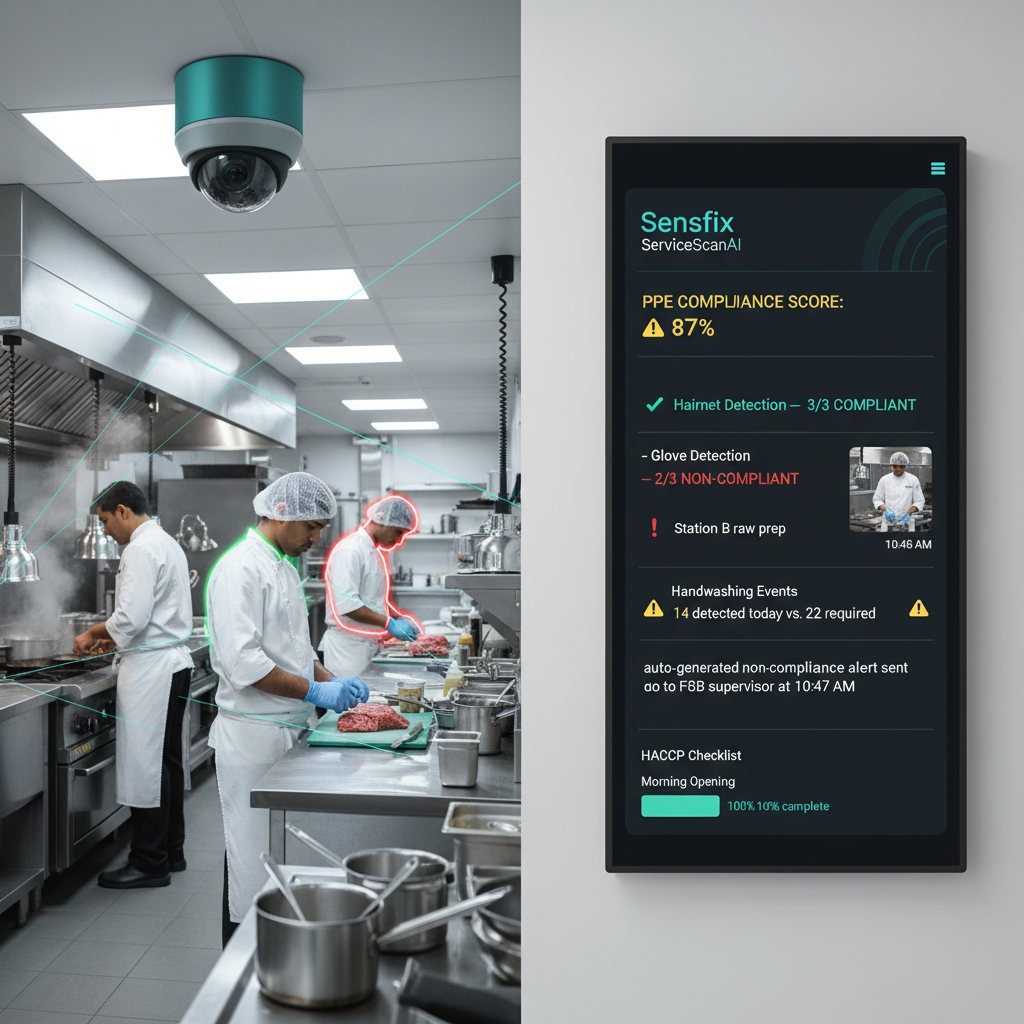
ServiceScanAI detects PPE/uniform compliance via existing kitchen CCTV, the same object detection approach proven at Port of Tampa for safety compliance (PPE, hard hats, vest detection). Deep learning models analyze existing camera feeds, detecting hairnet compliance, glove usage, chef coat presence, handwashing frequency, and cross-contamination risks.
TaskflowDigitizerAI digitizes HACCP opening/closing checklists with mandatory photo evidence at every step. The Multimodal Rule Engine triggers instant non-compliance alerts with timestamped photographic evidence for health audits.
PathSpot requires dedicated hand-scanning hardware at every sink. Sensfix uses cameras already installed in most commercial kitchens for fire safety or security purposes, requiring no additional hardware investment.
Water Leak Detection & Prevention
The Problem
Leaks discovered reactively through visible water stains, mold, or flooding. Hidden leaks behind walls persist for months. Average water damage claim: $10,000–$50,000+ per incident. Hotels face increasing water scarcity regulations and sustainability mandates.
What Leading Properties Report
| Deployment | Scope | Result |
|---|---|---|
| WINT Water Intelligence (Empire State Building) | 10,000+ systems globally | Reduced consumption by 7.5M gallons/year; $100K+ annual savings; $500K+ in prevented damage; 1,500% ROI with 3-month payback |
| Munich Re partnership | Performance warranty for hospitality buildings | $250,000 warranty coverage, reflecting underwriter confidence in the technology |
How Sensfix Adds Intelligence Without Dedicated Plumbing Sensors
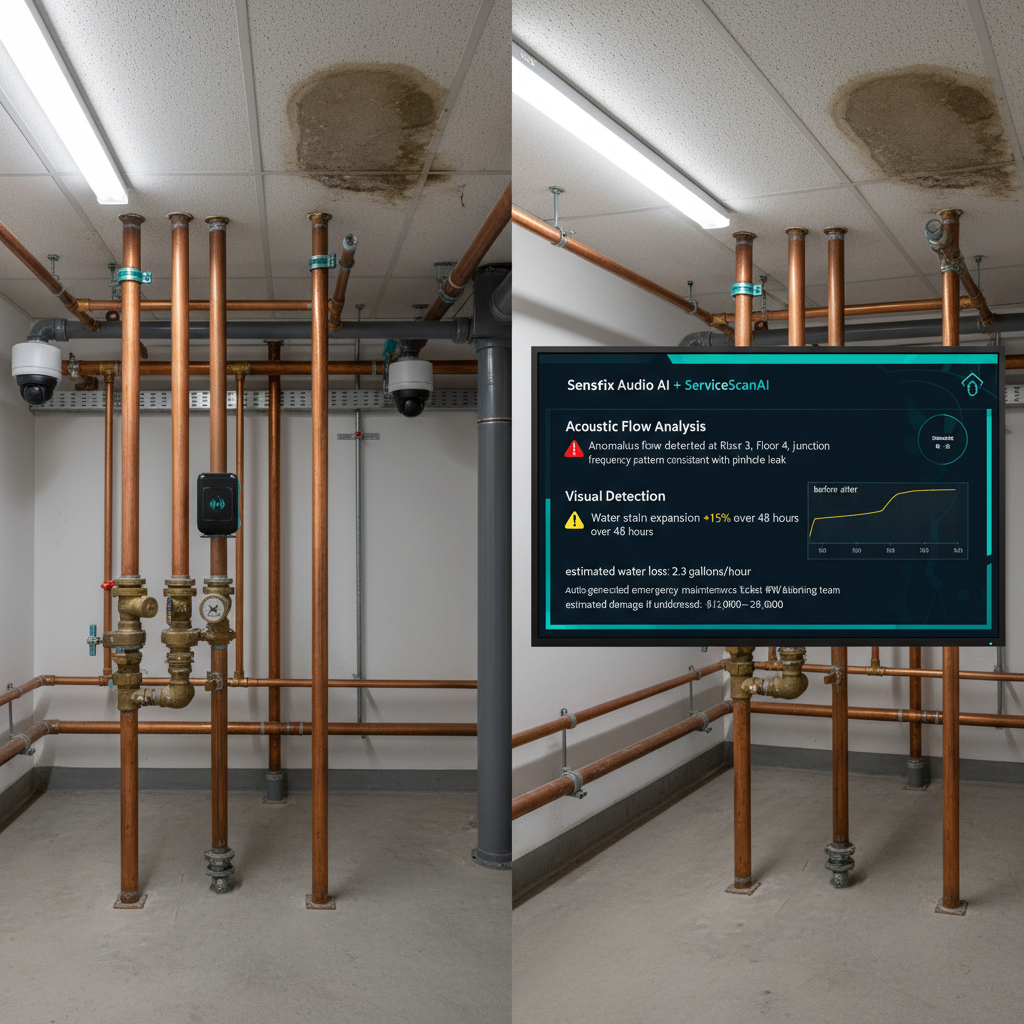
Audio AI Rule Engine detects abnormal water flow sounds, the same acoustic anomaly detection technology proven at the world's second-largest train manufacturer for mechanical systems. Microphones placed near mechanical rooms and plumbing risers catch flow anomalies that indicate developing leaks.
ServiceScanAI monitors pipe access points, ceilings, and walls for visual signs of moisture via existing CCTV, proven at Port of Tampa for infrastructure condition monitoring. The Multimodal Rule Engine auto-generates emergency maintenance tickets, combining audio and visual evidence for precise leak localization.
WINT requires dedicated flow sensors on every water supply line. Sensfix provides an additional layer of detection using audio AI and existing cameras, catching leaks where dedicated sensors haven't been installed.
Swimming Pool Safety & Drowning Detection
The Problem
Pool safety relies entirely on human lifeguards who cannot maintain 100% focus. 88% of child drowning deaths occur with at least one adult nearby. Drowning is often silent with no splashing, no screaming. Hotels face massive liability exposure from pool incidents.
Named Deployments with Results
| Deployment | Scope | Result |
|---|---|---|
| Poseidon / AngelEye Hotel (Maytronics Group) | USA, Scandinavia, Benelux, Germany, Australia, Japan, China | Detection within 10 seconds; specialized hotel product |
| Coral Smart Pool MYLO | Leonardo Plaza Cypria Maris Beach Hotel (Cyprus) | Expanding to all Leonardo Hotels in Cyprus |
| Singapore mandate | 11+ public pools | Government-required drowning detection by 2020 |
Pool Safety as Part of a Complete Property Platform
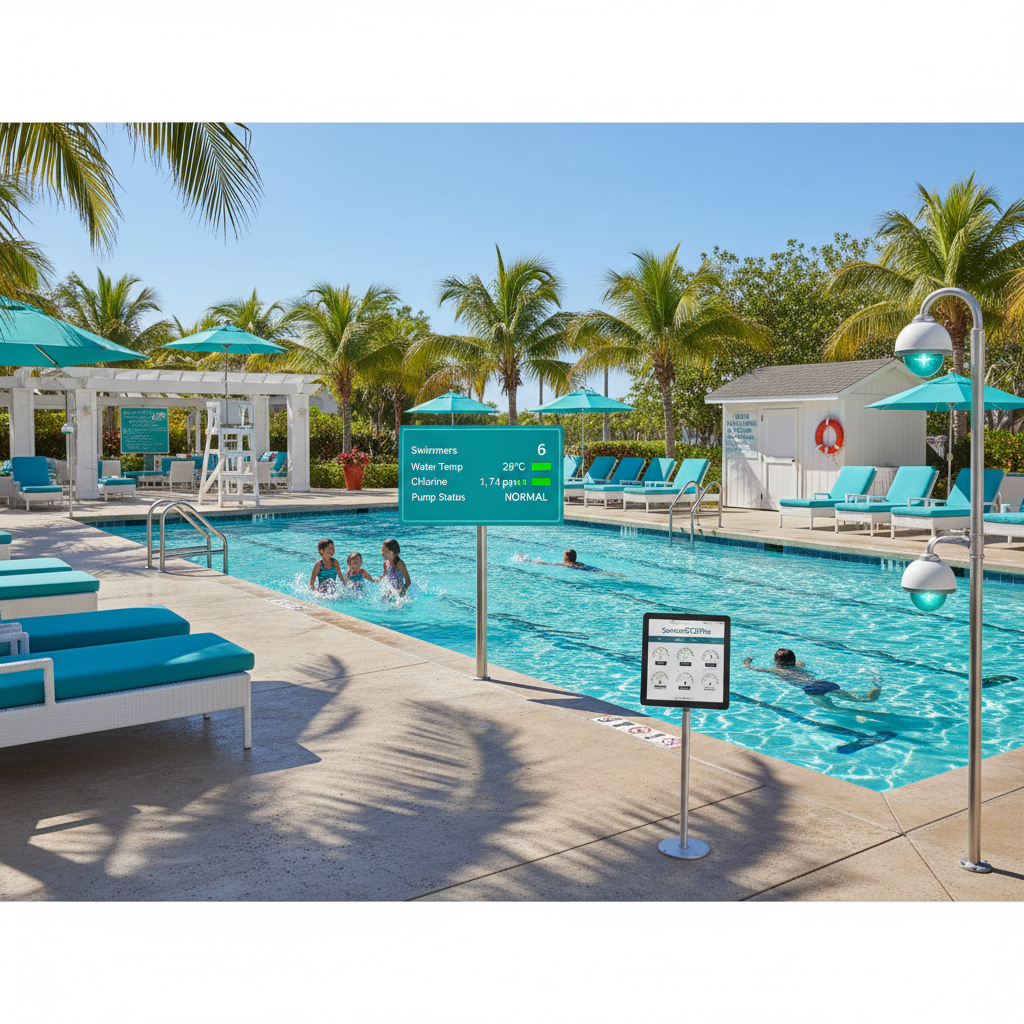
The Multimodal Rule Engine deploys on pool CCTV for swimmer tracking and motionless person detection, identifying persons at pool bottom for more than 10 seconds using 3D texture/volume analysis. The same real-time video analytics proven at Port of Tampa for safety zone enforcement.
ServiceOCRPro reads pool chemical gauges (chlorine, pH, alkalinity) during technician rounds, proven gauge-reading technology from Cadagua wastewater plant. Audio AI monitors pool pump health using the same rotating-machinery analysis from the world's second-largest train manufacturer. TaskflowDigitizerAI digitizes pool safety checklists with photo evidence.
Dedicated pool safety systems like Poseidon solve one problem. Sensfix delivers drowning detection alongside pool equipment maintenance, chemical compliance, and facility-wide safety, all from a single platform.
Security & Perimeter Monitoring
The Problem
Security relies on human guards patrolling, passive CCTV reviewed only after incidents, and simple motion sensors generating massive false alarms. Guard costs run $25–$30/hour per position. Post-2017 Las Vegas shooting, security technology investment across casino-hotels accelerated dramatically.
What Leading Hotels Report
| Deployment | Scope | Result |
|---|---|---|
| Verkada × Core Hospitality | 20 Marriott-branded properties in Scandinavia | 30% cost reduction in security infrastructure, 98% time savings in footage retrieval |
| Ambient.ai | AI video analytics for hospitality | 95%+ reduction in false alarm volume |
| Knightscope K5 × M Resort Spa Casino | Autonomous patrol robot (Las Vegas) | $7–$10/hour vs. $25–$30 for human guard |
| Verkada × Shaner Hotel Group | 52 properties | Investigation time reduced from 1–2 days to minutes |
How Sensfix Transforms Existing Camera Investments
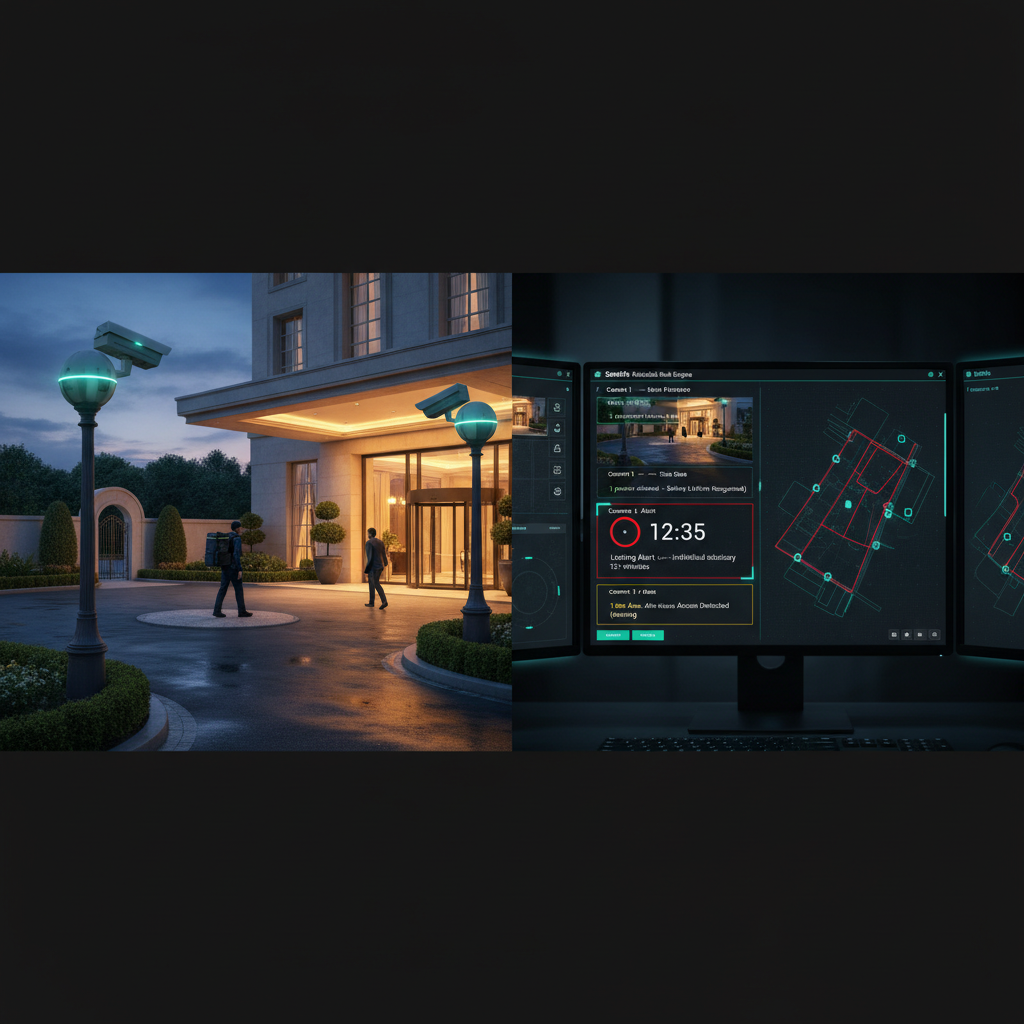
The Multimodal Rule Engine deploys as an AI overlay on existing CCTV, the same geofencing and unauthorized-access detection proven at Port of Tampa for restricted zone monitoring. No new cameras, no proprietary hardware, no sensor network installation.
The system understands context, distinguishing maintenance workers from intruders, delivery personnel from trespassers. Zone-based rules adapt automatically: different access permissions during active events versus quiet periods.
ServiceScanAI provides people counting and dwell-time analytics proven across commercial building deployments on 3 continents. Verkada requires replacing existing cameras with their proprietary hardware. Sensfix works with whatever cameras are already installed.
Building Exterior & Facade Inspection
The Problem
Manual inspections requiring scaffolding cost $50K–$200K+ per large building, take weeks, and are dangerous. No hotel chain has published an AI facade inspection case study; this is a documented first-mover opportunity. Post-hurricane rapid assessment takes days of manual triage.
A First-Mover Opportunity
| Capability | Current State | Potential |
|---|---|---|
| Inspekt AI (Switzerland) | Targets hotels specifically | Detects cracks, water damage, window irregularities; creates 3D digital twins |
| Industry composite | Adjacent industries (infrastructure, commercial) | Inspection costs cut 10x, time reduced 50–70%, safety incidents cut 70% |
The Core Sensfix Capability
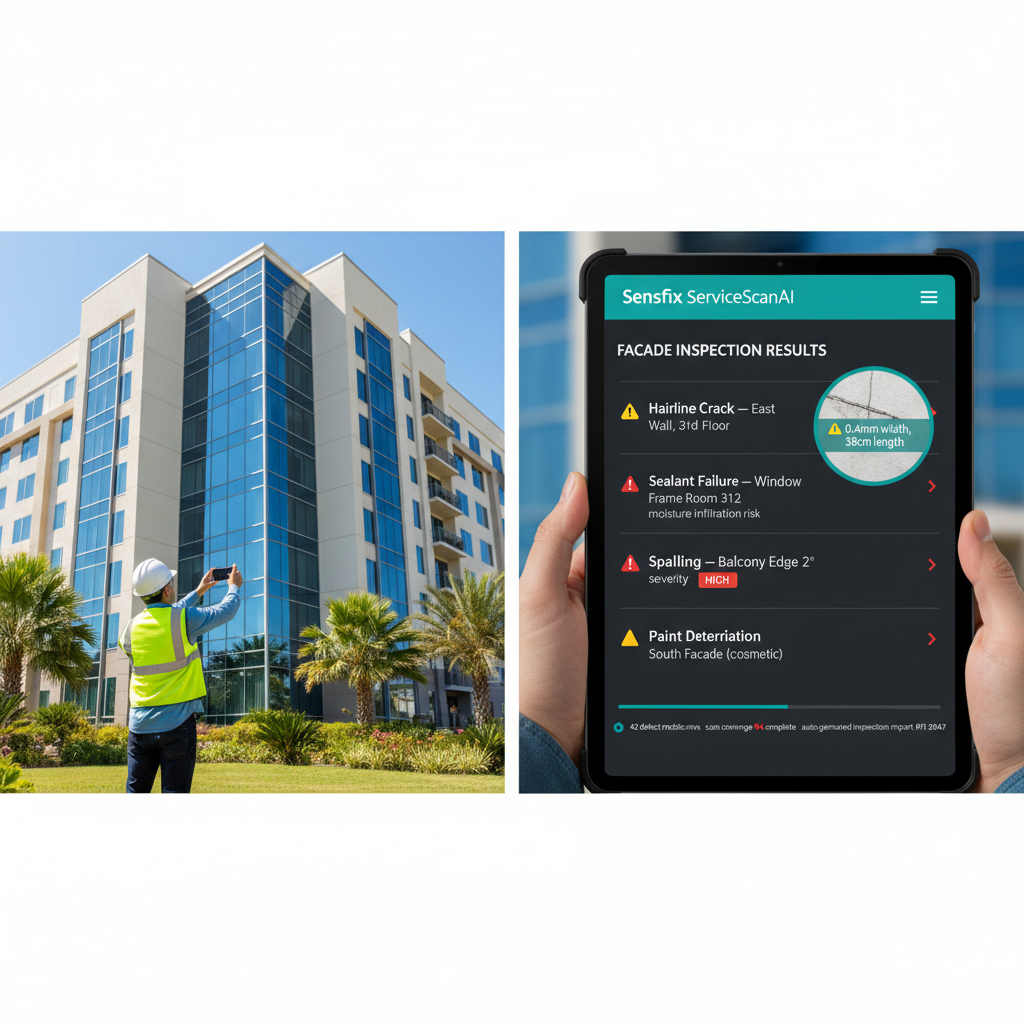
ServiceScanAI with 42+ proprietary defect models, the CORE Sensfix capability proven across Port of Tampa (crane/infrastructure inspection), European infrastructure group, and commercial building portfolios on 3 continents. Detects hairline cracks, spalling, exposed rebar, sealant failures, water staining, and paint deterioration at resolutions as fine as 0.2mm.
No drones, no scaffolding, no permits required. Smartphone-based. Staff walk the property perimeter with the Sensfix mobile app, capturing photos of each building face. AI automatically detects and classifies defects with severity ratings. This is what Sensfix does best, and no hotel chain has deployed it yet.
Parking Management & License Plate Recognition
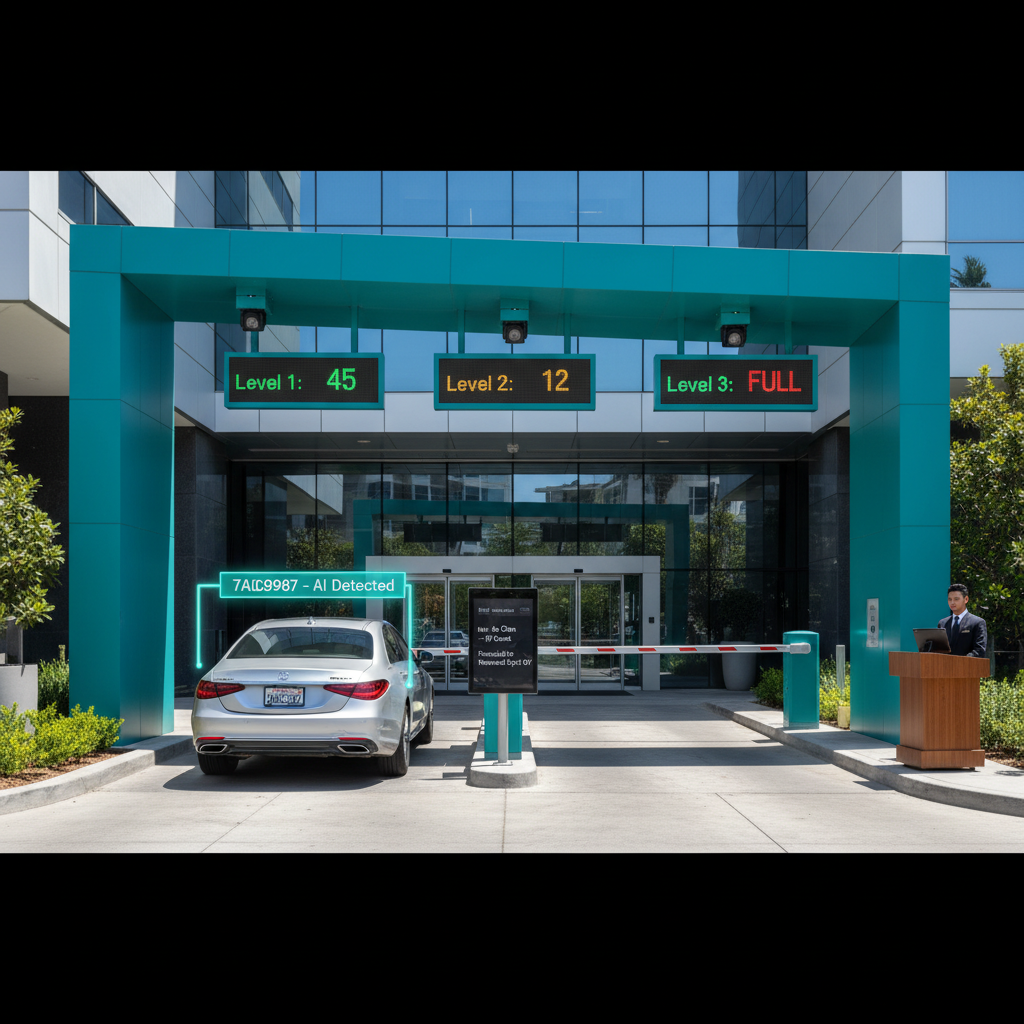
The Problem
Manual parking management requires dedicated staff, is error-prone, and provides no data for optimization. Guest reported issues about parking availability are common at urban hotels. No real-time visibility into occupancy levels for front desk or valet teams.
What Leading Hotels Report
| Deployment | Scope | Result |
|---|---|---|
| Verkada × Orange Lake Resort | LPR cameras across 1,100 acres | Automated gate entries across one of hospitality's busiest gate systems |
Proven Vehicle Detection Applied to Hospitality
The Multimodal Rule Engine on parking CCTV for LPR plus occupancy counting, using the same vehicle detection technology proven at Port of Tampa for container truck tracking with <1% error rate. ServiceScanAI provides vehicle detection and classification.
The rule engine triggers alerts for prolonged parking or approaching-full-capacity thresholds. VIP guest vehicles are auto-identified for priority treatment. Real-time occupancy data feeds to the front desk and valet team. No dedicated parking management hardware required beyond existing CCTV.
Employee Productivity & Guest Analytics
The Problem
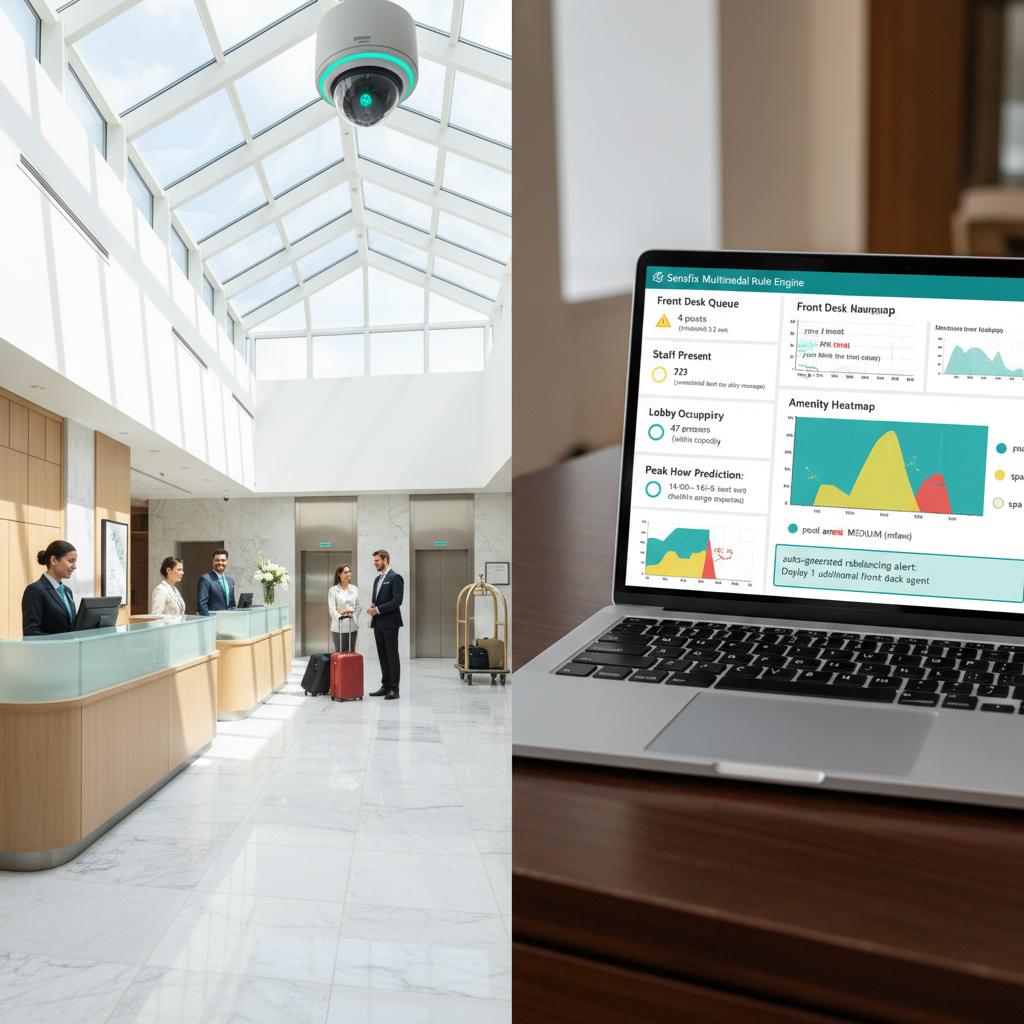
No visibility into staff deployment effectiveness. Front desk queues build without management awareness. Amenity utilization data is anecdotal. The hospitality sector has the highest quit rate of any industry at 4% monthly, making workforce optimization critical.
What Leading Hotels Report
| Deployment | Scope | Result |
|---|---|---|
| Optii Solutions at Le Méridien Vienna | Predictive AI for housekeeping route optimization | 10% productivity increase, 30% faster cleaning, 60% faster turnaround, 95% reduction in manual comms |
| Ipsotek at Media One Hotel Dubai | CV for front desk monitoring | Auto-detects when staff unavailable and guests queuing; dispatches additional staff |
How Sensfix Delivers Workforce Intelligence
The Multimodal Rule Engine on CCTV for staff presence plus guest flow analysis, using the same people counting and dwell-time analytics proven across commercial building deployments on 3 continents. ServiceScanAI provides queue detection and occupancy counting.
ReportAI enables AI-powered issue classification in seconds versus the industry-average 21 minutes per JLL benchmark. The system identifies periods of understaffing at guest touchpoints and triggers rebalancing alerts automatically. Guest flow analytics track peak usage of amenities, dwell time, and flow patterns for service optimization.
Maintenance Workflow Digitization
The Problem
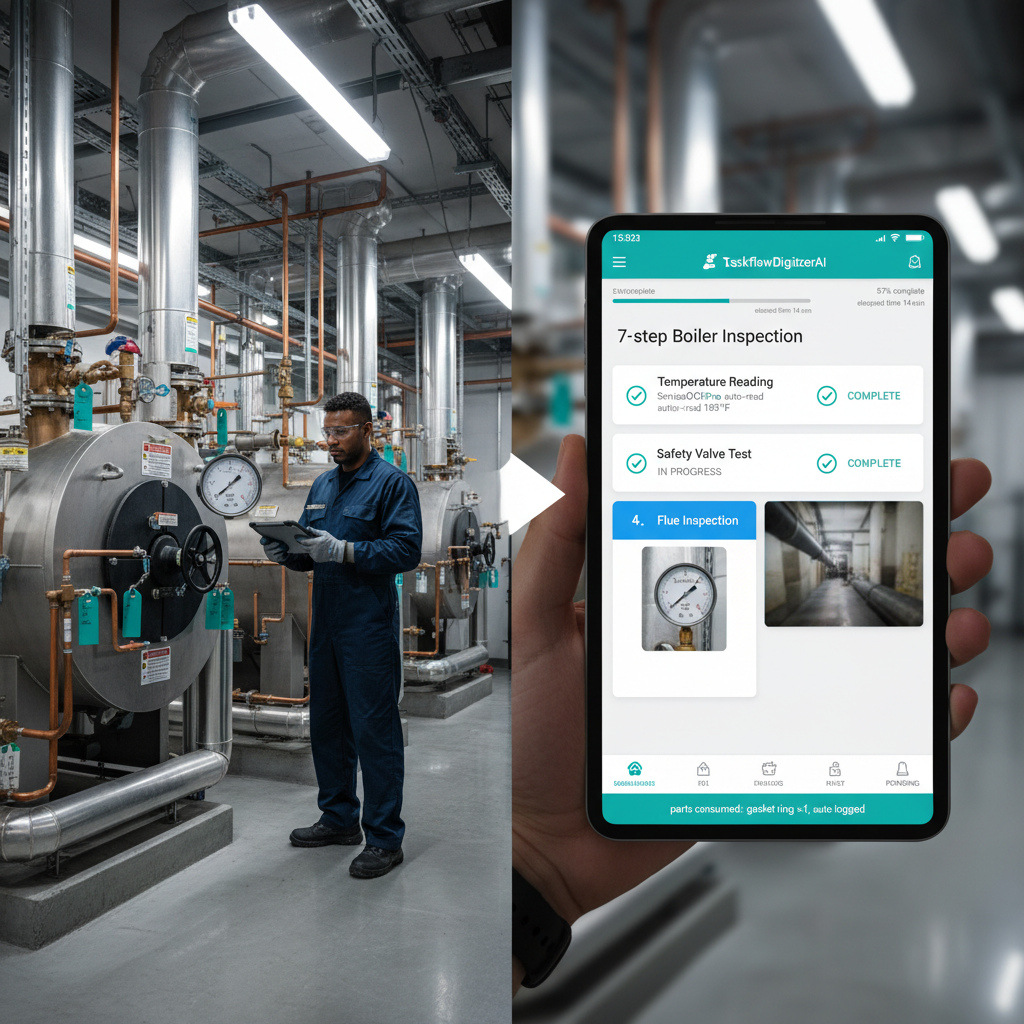
Industry benchmark (JLL): average time to receive, classify, and dispatch a maintenance issue is 21 minutes. Paper-based work orders are lost, illegible, or incomplete. No real-time visibility into workflow progress. Inventory consumption is untracked, leading to waste and stockouts.
Industry Performance Data
| Benchmark | Metric | Source |
|---|---|---|
| Issue classification time (manual) | 21 minutes average | JLL industry benchmark |
| Issue classification time (AI-assisted) | Seconds | Sensfix ReportAI, proven across 3 continents |
| Housekeeping optimization | 10% productivity, 30% faster cleaning | Optii Solutions at Le Méridien Vienna |
| Manual communications reduction | 95% reduction | Optii Solutions / Curator Hotel & Resort Collection |
From Paper to Digital in One Platform
TaskflowDigitizerAI, the same free-form workflow builder proven at 5G Smart Factory and across 46 enterprise clients on 3 continents, digitizes any maintenance procedure: elevator inspection, generator testing, pool chemical rounds, room deep-cleaning. Facility managers create digital workflows; technicians swipe through steps on the mobile app, capturing photo/video evidence at each stage.
ReportAI provides AI-powered issue classification in seconds. FormifyPro creates custom inspection forms. The Multimodal Rule Engine automates the entire detect → classify → alert → dispatch → resolve process. Inventory consumption is tracked at every workflow step with auto-generated reports. With Sensfix's 6 AI agents working autonomously, classification drops from 21 minutes to seconds.
Slip-and-Fall Detection & Prevention
The Problem
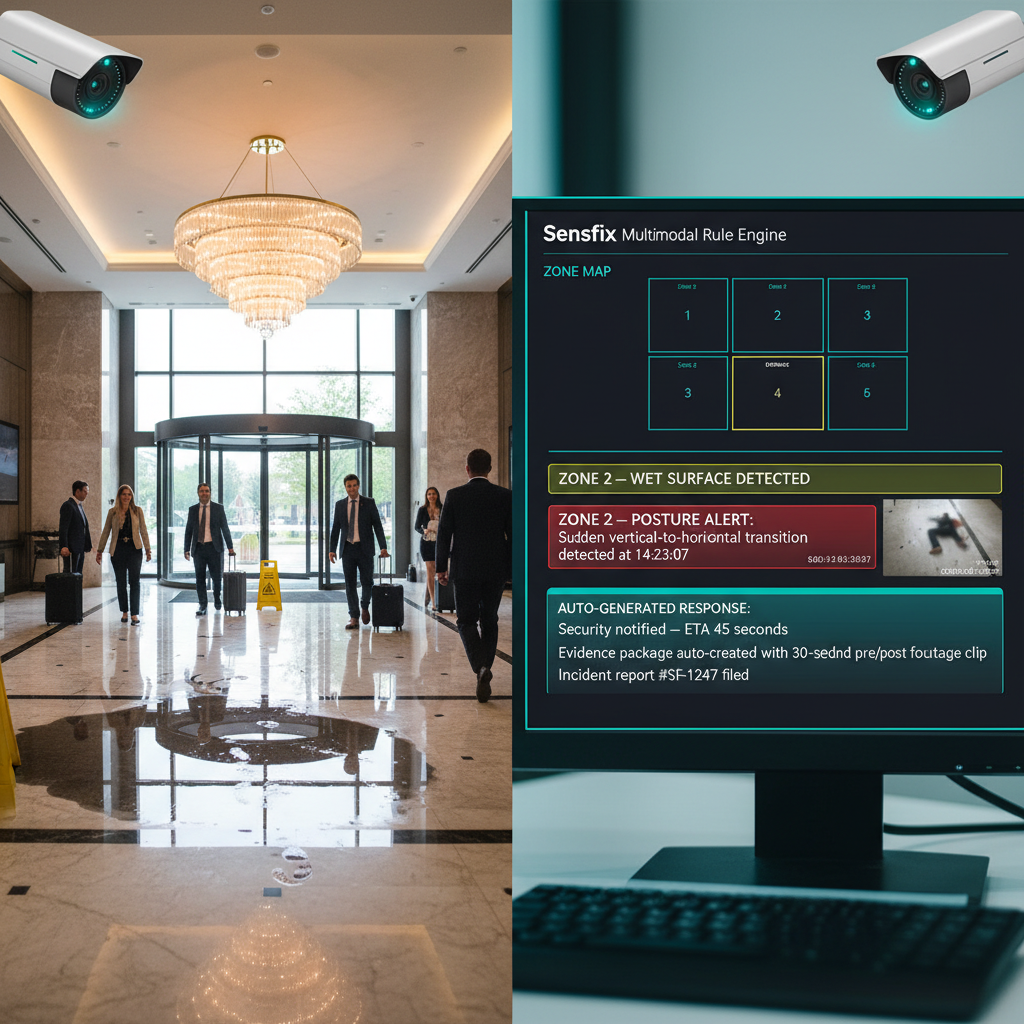
Slip-and-fall claims are the single largest liability exposure for hotels. Without real-time detection, injured guests may lie on the floor for minutes before discovery. Post-incident, hotels lack timestamped video evidence to defend against fraudulent claims. Insurance premiums are driven by claim frequency.
What Leading Hotels Report
| Deployment | Scope | Result |
|---|---|---|
| Alpha Vision | Hotel-specific fall detection | "Slip-and-fall claims used to be our biggest exposure. Alpha Vision helped us identify risks early." |
| Verkada | Automatic slip-and-fall alerts | Linked footage for evidence preservation across hotel deployments |
Proven Safety Analytics Applied to Hospitality
The Multimodal Rule Engine on existing CCTV, the same real-time video analytics and behavioral detection proven at Port of Tampa for hazardous activity detection. ServiceScanAI detects posture changes and fall events by analyzing CV body position data, identifying sudden transitions from upright to horizontal position.
Automatic alerts with timestamped footage are sent to the security team within seconds. Evidence packages are auto-generated for insurance and legal purposes. The system creates a complete audit trail, not just detecting falls after the fact, but providing the timestamped, camera-linked documentation that defense attorneys need.
Laundry Equipment Predictive Maintenance
The Problem
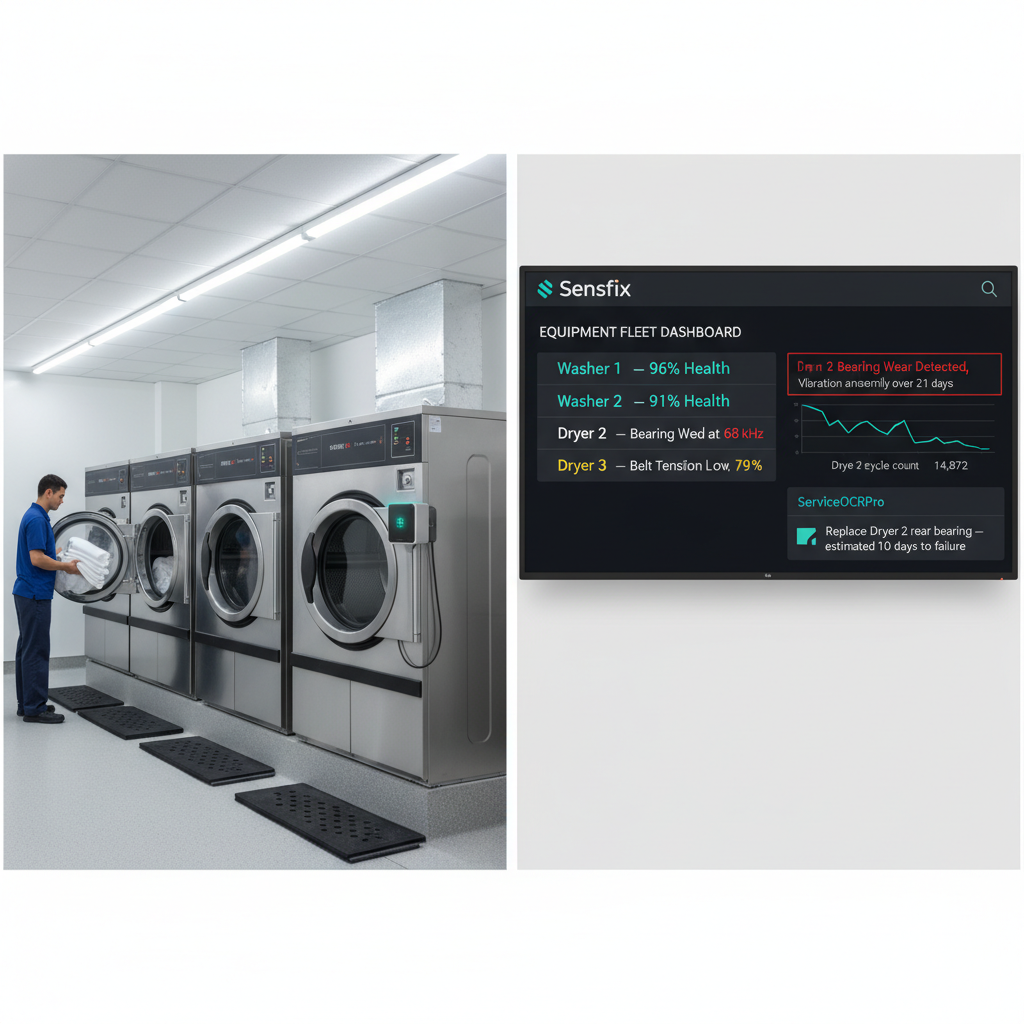
Hotels process thousands of pounds of laundry daily. Equipment breakdowns halt operations, force expensive emergency outsourcing, and delay room turnover. Calendar-based maintenance misses developing faults. Linen management costs are $50,000–$150,000 annually in replacement costs alone.
A First-Mover Opportunity
No hotel has published a specific laundry equipment predictive maintenance deployment. The underlying vibration/audio AI technology is proven in adjacent industries by Augury, Nanoprecise, and 3DSignals. CitizenM Hotels slashed laundry costs by 30% using RFID-based linen tracking (Laundris). HID/InvoTech RFID tags survive 200+ wash cycles.
Applying Proven Rotating-Machinery Analysis
Audio AI Rule Engine, the same rotating-machinery acoustic analysis proven at the world's second-largest train manufacturer for compressor monitoring and at industrial facilities for motor health monitoring, applies directly to commercial washers, dryers, and ironers.
Audio AI and vibration sensors monitor for bearing wear, belt degradation, motor imbalance, and other mechanical issues. ServiceOCRPro reads equipment panel displays. TaskflowDigitizerAI digitizes laundry equipment maintenance SOPs with photo evidence. A greenfield opportunity for Sensfix to establish the first hotel-specific reference case.
Generator Fuel Monitoring & Optimization
The Problem
Generator fuel consumption checked manually on inconsistent schedules. Fuel theft is common and difficult to detect. No real-time visibility into consumption patterns relative to occupancy or operational demand. Fuel costs represent a significant operational expense, especially in regions with unreliable grid power.
A First-Mover Opportunity
No hotel has published an AI fuel monitoring deployment with quantified results. The general OCR meter reading technology is proven: Anyline guarantees 99% accuracy, and LAIWA Metering provides non-intrusive optical readers via NB-IoT. Both validate the approach. Sensfix delivers the same capability as part of a complete operations platform.
Proven OCR Applied to Generator Monitoring
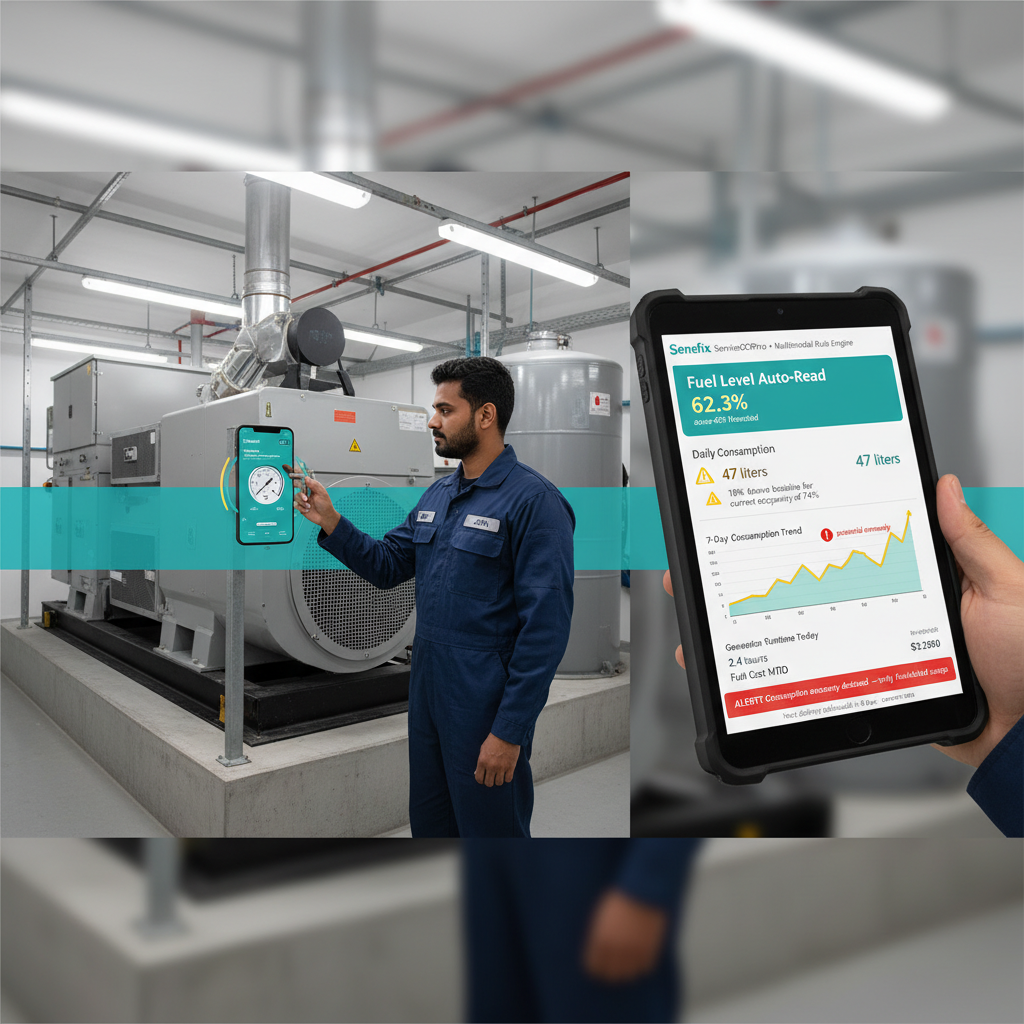
ServiceOCRPro automates fuel gauge and generator panel reading, proven at Cadagua wastewater facility for industrial gauge digitization. AI establishes usage baselines and detects consumption anomalies indicating theft, leaks, or inefficient operation.
The Multimodal Rule Engine sets consumption thresholds and alerts when exceeded, with per-occupied-room normalization. FormifyPro collects fuel data for sustainability reporting. The same approach proven across European infrastructure clients for utility monitoring applies directly to hotel generator fleets.
Guest Issue Reporting & Management
The Problem
Industry benchmark (JLL): average time to receive, classify, and dispatch a maintenance issue is 21 minutes. Guest issues are logged inconsistently across channels (phone, in-person, app). No standardized classification system leads to misrouting, delays, and repeated guest follow-ups. Only 2.9% of hospitality employees possess AI skills (BCG/NYU 2026).
What Leading Hotels Report
| Deployment | Scope | Result |
|---|---|---|
| The Cosmopolitan of Las Vegas ("Rose" AI chatbot) | 50K–70K engagements monthly | Guests spend 30% more, are 33% happier; ~90% resolved by AI |
| Hilton Connected Room | Smart room technology across portfolio | 20% increase in guest satisfaction among users |
| Marriott AI Incubator | $1.1B+ tech investment for 2026 | 150+ AI use cases in pipeline |
From 21 Minutes to Seconds
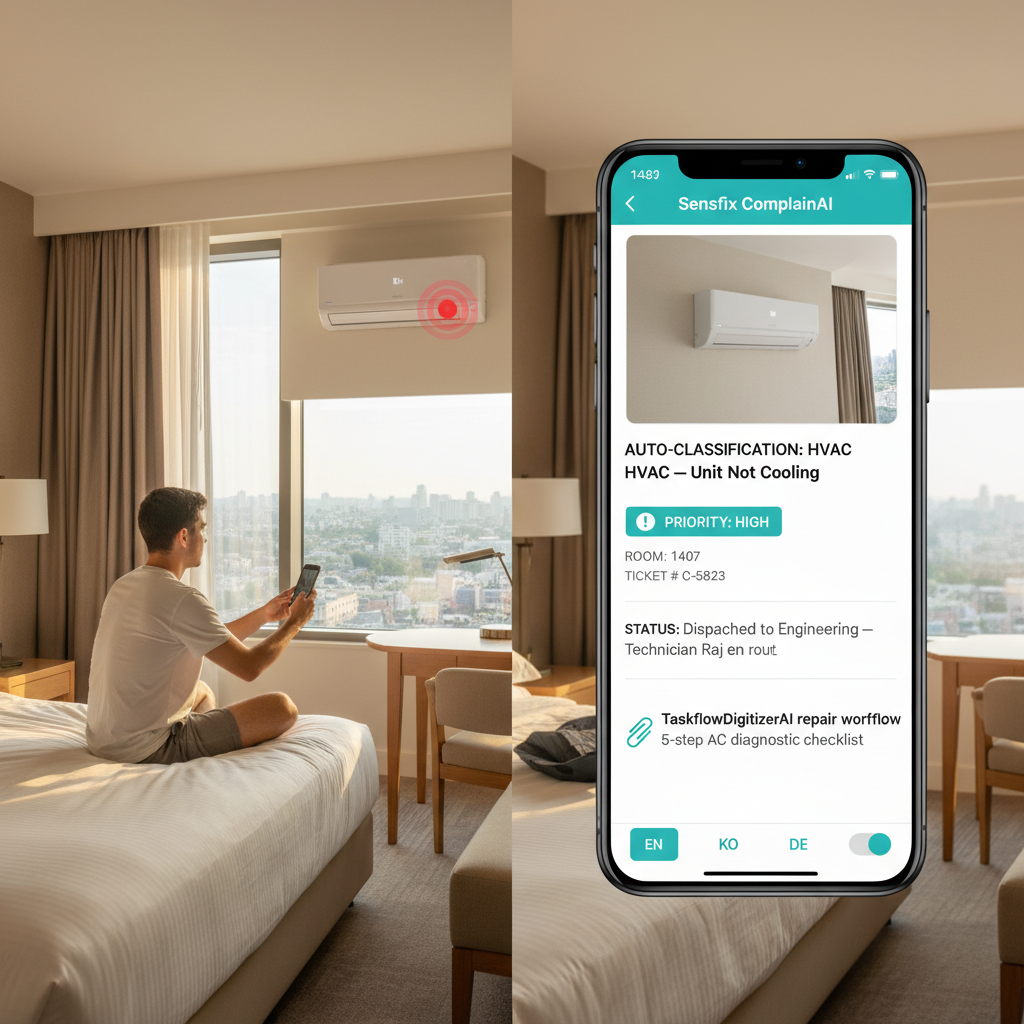
ReportAI, the same AI-powered issue classification system proven across commercial building portfolios on 3 continents, replacing the industry-average 21 minutes with seconds. Staff or guests scan any issue via the mobile app; AI classifies, prioritizes (P1–P4 severity), and routes automatically. Multi-language support for international hotel properties.
TaskflowDigitizerAI dispatches repair workflows with photo evidence. The Multimodal Rule Engine tracks resolution times and escalates overdue tickets. The difference from chatbot solutions like "Rose": ReportAI doesn't just converse. It classifies from a photo, creates an actionable ticket, and dispatches a technician with a specific workflow. Zero training required beyond knowing how to use a smartphone camera.
Transfer Capability Matrix
Every capability listed below is production-proven. The third column shows how each maps to hotel operations domains documented above.
| Capability | Where Proven | Hotel Application |
|---|---|---|
| 42+ defect detection models (0.2mm resolution) | Industrial facilities, 3 continents | Room damage, facade cracks, linen defects, pool area condition |
| Audio AI for rotating machinery health | World's 2nd-largest train manufacturer (compressors) | HVAC compressors, elevator motors, laundry equipment, pool pumps |
| Automated gauge/meter OCR (99%+ accuracy) | Cadagua wastewater facility | Generator fuel gauges, pool chemical readings, HVAC panel displays |
| Safety zone enforcement & PPE detection | US Gulf Coast port (production) | Kitchen PPE compliance, restricted area monitoring, perimeter security |
| Multi-site compliance dashboards | European retail chain (4,600+ stores) | Multi-property housekeeping QA, brand compliance reporting |
| Digital workflows + 80% parts savings | Bay Area automaker | Maintenance SOPs, housekeeping checklists, pool safety rounds |
| Real-time vehicle tracking (<1% error) | US Gulf Coast port (production) | Parking occupancy, LPR, valet fleet tracking |
| People counting & dwell-time analytics | Commercial building portfolios, 3 continents | Guest flow, staff presence, queue detection, amenity utilization |
| AI-powered issue classification (seconds vs. 21 min) | 46 enterprise clients globally | Guest reported issues, maintenance requests, housekeeping issues |
| Baseline comparison (image-to-image) | Bay Area automaker (vehicle body panels) | Room damage detection, minibar reconciliation, asset tracking |
| Process monitoring & coverage verification | Industrial quality control (3 continents) | Room cleanliness scoring, food safety compliance, cleaning QA |
| Swimmer/person tracking & fall detection | Port safety zone enforcement + commercial buildings | Pool drowning detection, slip-and-fall prevention, lobby safety |
Implementation Approach
Phase 1: Guided Evaluation (Up to 90 Days)
A structured evaluation where Sensfix deploys the SAAI Suite on two selected use cases under a dedicated services agreement. This phase includes full platform deployment, AI model configuration for hotel-specific conditions, and comprehensive reporting, ensuring the hotel operator can evaluate real-world performance with rigor before committing to property-wide deployment.
Pilot A: Room Cleanliness & Damage Verification
Deploy computer vision on housekeeping smartphones for one floor or wing. AI verifies room cleanliness scores and detects damage from post-checkout photos. Deliverable: comparative report showing AI findings vs. current manual assessment, with guest issue correlation data.
Pilot B: Kitchen Hygiene Compliance Monitoring
Deploy AI overlay on existing kitchen CCTV for PPE compliance, handwashing frequency, and food safety protocol adherence. Deliverable: compliance dashboard with timestamped evidence for health inspections, time savings quantification.
Phase 2: Enterprise SaaS Deployment
Following successful evaluation, Sensfix deploys as a property-wide or portfolio-wide SaaS platform under an annual agreement. Unlimited users, unlimited licenses, unlimited data nodes. Every facility manager, housekeeper, maintenance technician, and department head. Every camera, sensor, and mobile device. No per-user fees, no data caps. One annual platform fee designed so adoption spreads organically without procurement friction.
About Sensfix
Founded
2018 (Delaware C-Corp)
Headquarters
San Francisco, CA
CEO
Balaji Renukumar
Global Offices
San Francisco · Łódź Poland · Seoul South Korea
Enterprise Clients
46 clients across 3 continents
R&D Grant
$2.5M international R&D grant (2022), funding the world's first multimodal rule engine
Research
Stanford University, Department of Computer Science, Robotics Laboratory
Technology Partners
Google Cloud · Microsoft Azure
Key Deployments
World's 2nd-largest train manufacturer · Major European infrastructure group · Port of Tampa / Agunsa · South Korean railways · European retail chain (4,600+ stores) · Bay Area automaker